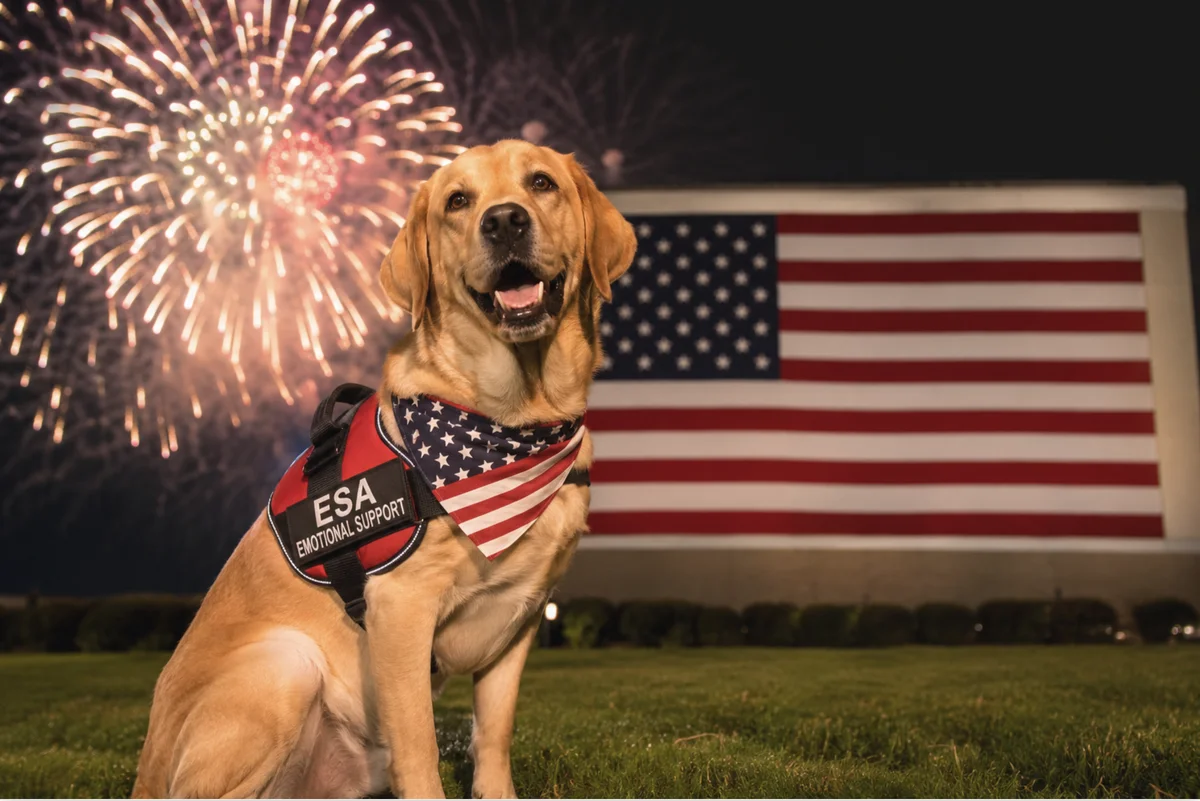
Happy 250th Anniversary, America! On this 4th of July, we celebrate the liberties that our founding fathers fought so hard to secure. Even the millions of FIFA fans visiting our country are joining in the celebration as they express their admiration for the special things our country has to offer. These visitors are captivated by our hospitality, the vastness of our nation, and our patriotism.
Emotional Support Animal owners can also celebrate as they appreciate the rights secured for them not only by the Constitution but also by Federal Regulation. So, to those ESA owners planning to celebrate this special 4th of July with your animal friend, this article is for you. Wave your flag proudly, but please be mindful of your ESA.
Your ESA has been there for you to help with stress and anxiety. Now it's your turn to ensure that your ESA is not put in a stressful situation. We know the last thing you want to do is increase anxiety during the 4th of July. Here are some facts and tips about ESAs and fireworks.
Fireworks Are Stressful for Animals
Fireworks are fun for humans, but extremely stressful for animals, especially dogs. Because ESA owners and their animals are so close, a dog's stress can transfer to the owner. If you've ever noticed your own anxiety spike when your pet is scared, that's not a coincidence — the bond between an ESA and their owner runs deep in both directions.
Dogs Have a Keen Sense of Hearing
Dogs have very sensitive ears. Loud booms cause severe panic. This panic often makes dogs try to escape and get lost. The Weather Channel reports that the number of stray dog intakes each year surges in the days around the Fourth of July. In fact, a few years ago, our family spent days walking miles to help an ESA owner look for her dog, who bolted from the family picnic because of nearby fireworks. The anxiety level for the owner was at an all-time high until the dog was located.
Strong Sense of Smell
Dogs and cats have a strong sense of smell, and the smell associated with fireworks can add to the panic. This smell can get into the home through open windows — something many pet owners don't think about until it's too late. Keep windows closed as the evening progresses if fireworks are nearby.
How to Reduce and Calm Anxiety During Fireworks
These tips are primarily for dogs, but please be sensitive to the needs of your other animals by reducing the sound and smells in your home associated with fireworks. Above all, do not take your dog to fireworks. There are other ways to celebrate the freedoms that you both enjoy.
Start Your Personal Celebration Early
Celebrate the 4th of July with your animal outside, early in the day, before the fireworks start. We suggest that you and your dog take a long walk or hike early enough in the day so that you are both relaxed before outdoor festivities begin. Fireworks start around sunset, so plan accordingly.
Keep Your ESA Dog on a Leash at All Times on the 4th of July
Even if you are walking your dog before the nighttime fireworks begin, keep your ESA dog on a leash at all times on the 4th of July. We are all familiar with the random sounds of firecrackers that can occur throughout the day. An unleashed dog can bolt — avoid the heartache.
Keep Your ESA Dog Secured While in the Yard
If your dog is accustomed to running around the yard, even if it is fenced in, keep her secured by a cord or rope while in the yard. A loud noise can alarm a dog to the point where they will jump over a fence.
Food and Water
Schedule eating time so potty time happens well before the fireworks. Make sure there is plenty of water to drink in case it gets loud — even inside. Dogs drink more water while stressed, so having a full bowl available is important.
Keeping Things Safe Inside
Do your best to keep your home noise-free. If there is an unusual amount of noise because of the fireworks, it's your turn to bring reassurance. Be an Emotional Support Human for your dog or cat. Let them know you are there for them, and it's OK for them to be scared.
Speak calmly to your dog or cat and reassure them that things are fine. Pet them gently and hold them if they like that. Keep a familiar sound going in your home to drown out some of the fireworks noise — music, TV — whatever your animal is accustomed to hearing.
Crating Your Dog
Some dogs might feel safer in their crate. Cover the crate and play soothing sounds. Be aware when they are ready to leave the crate so they don't feel trapped.
Other Recommendations — Ask Your Vet
There are other recommendations you can find online, such as getting your animals accustomed to sounds by popping corn or creating other sounds gradually over time. Some also recommend medications for overly anxious dogs. If you are considering these approaches, we suggest you speak with your vet first.
Does Your Pet Already Act as Your Emotional Support Animal?
If your pet helps calm you down during stressful moments — like fireworks season — their companionship may already be functioning as emotional support in a clinically meaningful way. Many people don't realize that what their pet does for them every day is exactly what qualifies as an ESA under the Fair Housing Act.
If you feel your animal is acting as an Emotional Support Animal but you aren't practicing all your rights, give us a call. A same-day telehealth consultation with Dr. Rick Rieser, MD can determine whether an ESA letter is right for your situation — one flat fee of $110, no hidden charges, no memberships.
In Summary
Our best recommendation is to reduce loud noises and smells as much as you can. Be there to comfort your animals if it does get loud. If you know it's going to be loud, you can plan to be in another location that day if possible.
You know your Emotional Support Animals and your environment better than anyone else. Prepare accordingly.
And please email any tips or successful actions you have discovered for 4th of July fireworks to info@myesamd.com — so we are all smarter next year!
Have a Happy 4th of July — and Know Your Rights!
As we celebrate 250 years of American freedom, remember that ESA owners have federally protected rights to live with their emotional support animals. If you need documentation, My ESA MD is here — same day, one flat fee, a real licensed MD on the line.
If you or someone you know is experiencing a mental health crisis this holiday, please call or text 988 (Suicide and Crisis Lifeline) — available 24/7, free and confidential.