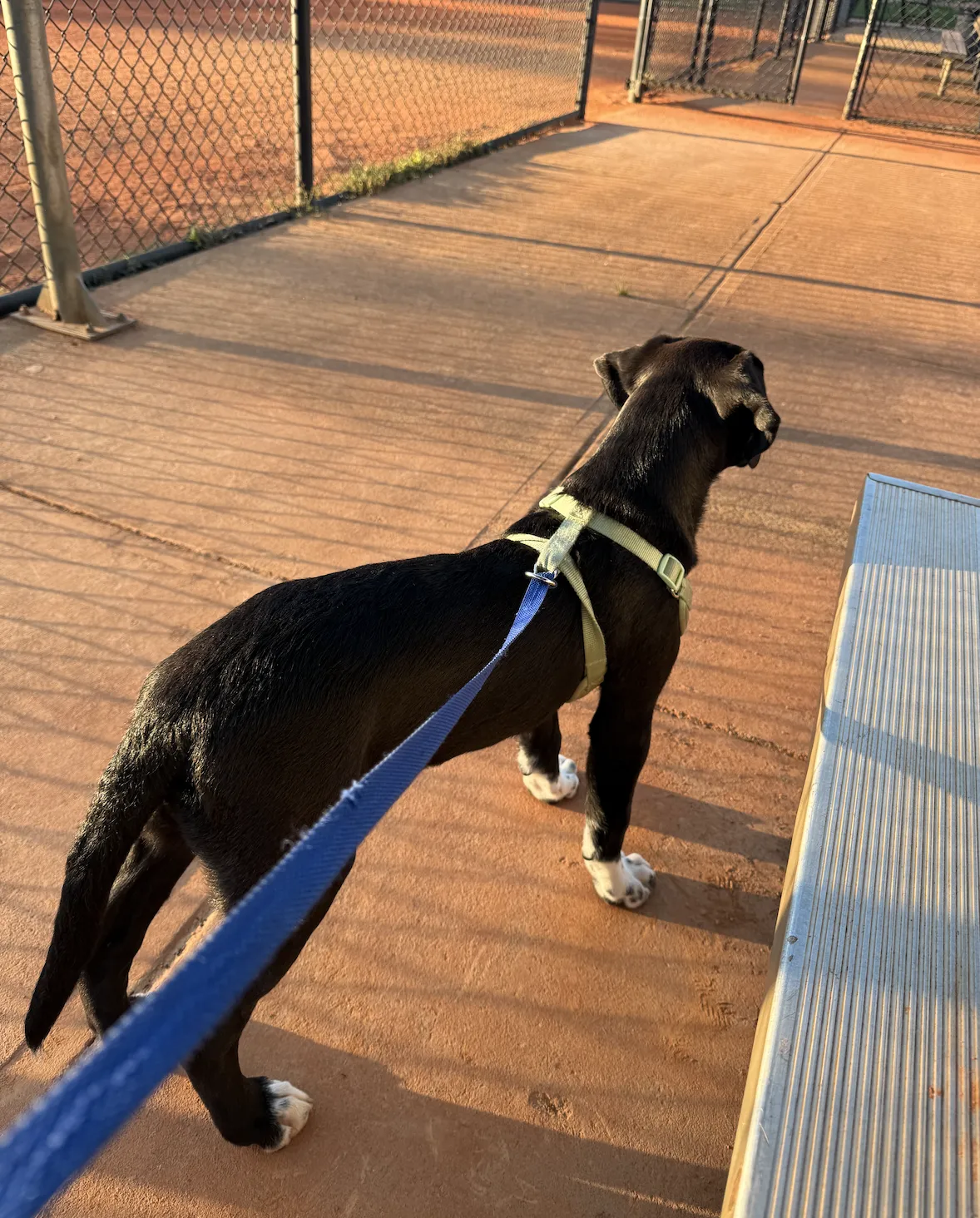
Yep, our beloved ESAs were front and center. Arizona's new definition specifically includes trained or untrained animals that provide therapeutic or emotional support for a person with a disability. That's quite a development, given the federal enforcement changes that followed. Here's the updated state law for 2026.
Having an ESA in Arizona: The Basics
An emotional support animal provides disability-related emotional support that helps alleviate one or more effects of a person's disability. Unlike a service animal, an ESA does not need to be individually trained to perform a particular disability-related task. An ESA just needs to be a caring companion.
A few facts:
- ESAs do not need specific task training to provide disability-related emotional support.
- ESAs generally do not have the same public-access rights as task-trained service animals.
- Arizona has its own state fair-housing law requiring reasonable accommodations for people with disabilities.
- Since 2025, Arizona law has expressly defined an “assistance animal” to include trained or untrained animals that provide therapeutic or emotional support.
- Arizona's state-law protections exist alongside the federal Fair Housing Act.
- Arizona does not maintain a general ESA registry or certification system that turns an ordinary pet into a legally recognized assistance animal.
What Is HB 2068?
This is the development that clarified Arizona's stance on ESAs. On May 13, 2025, Arizona enacted House Bill 2068, which became Chapter 191 of the Laws of Arizona 2025. The law amended A.R.S. § 41-1491, part of Arizona's fair-housing framework, to explicitly define what an “assistance animal” is.
Under the current statute, an assistance animal is a trained or untrained animal that works, provides assistance, performs tasks, or provides therapeutic or emotional support for the benefit of a person with a disability.
Those words matter. As Denzel said in Man on Fire, “trained or untrained.” And “therapeutic or emotional support.”
Arizona isn't merely relying on federal agency guidance to determine whether an untrained emotional support animal falls within the assistance-animal category. The definition is now etched into Arizona law.
Arizona Already Required Reasonable Accommodations
HB 2068 didn't create Arizona's entire disability-accommodation framework from scratch. Arizona did have its own fair-housing protections. Under A.R.S. § 41-1491.19, discrimination includes refusing to make reasonable accommodations in rules, policies, practices, or services when those accommodations may be necessary to give a person with a disability an equal opportunity to use and enjoy a dwelling.
That's an important distinction. The 2025 story isn't “Arizona had no state ESA protection, and suddenly it did.” It's more like this: Arizona had a disability-accommodation law, and in 2025 lawmakers made the assistance-animal piece clearer by defining assistance animals to include trained or untrained animals providing therapeutic or emotional support.
That's a much stronger legal foundation than simply relying on changing federal guidance.
What Does This Mean for an ESA Housing Request?
Arizona's fair-housing framework brings two major pieces together:
- State law requires reasonable disability accommodations in housing when the legal requirements are met.
- State law now expressly recognizes trained or untrained animals providing therapeutic or emotional support as assistance animals.
That means a qualifying emotional support animal can be considered as part of a disability-related reasonable-accommodation request under Arizona law. (As ESAs are a part of a person's ongoing treatment.)
Depending on the circumstances, a reasonable accommodation may require a housing provider to modify a rule or policy that would otherwise prevent the person with a disability from equally using and enjoying the residence. That may include animal-related housing policies.
The Arizona Attorney General's Civil Rights Division, the enforcement arm of the Arizona Fair Housing Act, specifically identifies refusal to make disability-related accommodations involving an assistive animal as a potential form of housing discrimination. Arizona's own enforcement materials have even used emotional support animals as examples, which bodes well for ESA owners.
So this isn't just something hibernating in the statute book. Arizona enforces disability-related assistance-animal accommodations.
What About Pet Deposits and Fees?
Once an assistance animal qualifies as a reasonable disability accommodation, the animal is not simply treated like a standard pet for purposes of the accommodation. Arizona's Attorney General maintains the position in fair-housing enforcement that housing providers may not require people with disabilities to pay extra fees or deposits as a condition of receiving a reasonable accommodation.
Federal fair-housing materials have likewise treated waiver of pet deposits or fees as an example of an assistance-animal reasonable accommodation.
That doesn't mean an animal gets a free pass to trash the place. A resident can still be responsible for damage caused by an animal when otherwise permitted by applicable law. The important distinction lies between an ordinary pet charge and responsibility for actual damage.
HB 2068 Also Added Protection for Landlords
Arizona's 2025 law doesn't just benefit ESA owners. HB 2068 added A.R.S. § 41-1497.38, addressing landlord liability involving assistance and service animals. Under that provision, a landlord generally isn't liable for injuries or damages caused by an assistance or service animal that is on the property as a reasonable accommodation or modification.
But Arizona lawmakers added a safeguard: the liability provision does not limit or abridge disability rights otherwise provided under Arizona's fair-housing laws.
That's a rather sensible balance. Arizona gave landlords some protection from liability for the animal's conduct without detracting from the underlying disability-accommodation rights.
Arizona Is Enforcing Assistance-Animal Rights
This is worth noting because statutes are one thing. Actual enforcement is another. The Arizona Attorney General's Civil Rights Division enforces the Arizona Fair Housing Act.
In 2025, the Attorney General announced the successful resolution of a housing-discrimination lawsuit involving a tenant's disability-related need for an assistance animal. The Attorney General specifically explained that Arizona's Fair Housing Act requires housing providers to make reasonable accommodations, when needed because of disability, including allowing an assistance animal in applicable circumstances.
That's strong evidence that Arizona's assistance-animal protections aren't merely theoretical.
Service Animals and ESAs Are Not the Same Thing
Housing law and public-access law are different. Under A.R.S. § 11-1024, Arizona provides public-access rights for qualifying service animals and addresses service animals in training.
Arizona law also makes clear that emotional support, comfort, companionship, and general well-being by themselves do not constitute the disability-related work or tasks required for service-animal status.
So an ESA may qualify as a disability-related assistance animal in housing without becoming a service animal for purposes of public access. That means an ESA doesn't automatically get access to restaurants, stores, past the velvet rope, or other public places simply because the animal qualifies for a housing accommodation. That's the key difference.
Arizona Has a Law Against Fake Service-Animal Claims
Arizona also has a specific provision targeting fraudulent claims of service-animal status. Under A.R.S. § 11-1024(K), a person who fraudulently misrepresents an animal as a service animal or service animal in training to a person or entity operating a public place can face a civil penalty of up to $250 for each violation.
Here's what that law targets: fraudulent service-animal claims involving public access. It doesn't make legitimate emotional support animals illegal, and it doesn't turn an ESA into a service animal. An ESA doesn't need fake service-animal status to have legitimate housing protections under Arizona law.
The Federal Fair Housing Act Still Matters
Arizona's state protections exist alongside the federal Fair Housing Act. The FHA's statutory reasonable-accommodation provision requires housing providers to make reasonable accommodations in rules, policies, practices, or services when they may be necessary to give a person with a disability an equal opportunity to use and enjoy a dwelling.
Historically, federal fair-housing law has applied this framework to disability-related assistance animals, including animals providing emotional support.
Now the federal enforcement landscape changed significantly in 2025 and 2026.
What HUD Changed in 2026 — and Why Arizona Is Well Positioned
Two federal developments formed the current status quo. In September 2025, HUD's Office of Fair Housing and Equal Opportunity (FHEO) withdrew its earlier 2013 and 2020 assistance-animal guidance documents. Then, on May 22, 2026, HUD issued a new enforcement memorandum changing FHEO's administrative approach to animal-related reasonable-accommodation complaints.
Under that enforcement approach, FHEO focuses its reasonable-cause and charging decisions on animals individually trained to perform disability-related work or tasks. The memorandum states that requests involving untrained emotional support animals are not presumptively reasonable under that federal administrative enforcement approach. That's quite the federal change.
Here's where Arizona came in with impeccable timing: Arizona had already written untrained animals providing therapeutic or emotional support directly into its own state fair-housing statute. HUD did not revoke Arizona law. Arizona's definition of an assistance animal and its state reasonable-accommodation requirements remain part of Arizona's own fair-housing framework.
The federal Fair Housing Act's statutory reasonable-accommodation language also remains in place, and HUD's 2026 memorandum does not erase a person's ability to pursue a private FHA action in court.
Yes, the May 2026 HUD memorandum had an effect. But it doesn't remove the state-law protections Arizona enacted in 2025.
Enforcing Your Rights Under Arizona Law
The Arizona Attorney General's Civil Rights Division enforces the Arizona Fair Housing Act. Someone who believes they experienced unlawful housing discrimination can file a housing complaint with the Civil Rights Division.
Here's the important deadline: under A.R.S. § 41-1491.22, a housing discrimination complaint generally must be filed within one year after the alleged discriminatory housing practice occurred or terminated.
The Arizona Attorney General also explains that qualifying housing discrimination charges filed with the Civil Rights Division are considered dual-filed with HUD.
So if an actual dispute is happening, don't assume you can wait indefinitely. File by that one-year deadline.
Key Points for Arizona ESA Owners
- Arizona has its own state fair-housing protections for people with disabilities.
- In 2025, HB 2068 amended A.R.S. § 41-1491 to expressly define an assistance animal as a trained or untrained animal that may provide therapeutic or emotional support for a person with a disability.
- A.R.S. § 41-1491.19 provides Arizona's state-law reasonable-accommodation requirement.
- Arizona's Attorney General actively enforces the Arizona Fair Housing Act and recognizes assistance-animal accommodations as a disability-related fair-housing issue.
- HB 2068 also added A.R.S. § 41-1497.38, providing certain landlord liability protection for assistance and service animals while expressly preserving disability rights.
- ESAs generally do not receive the public-access rights provided to qualifying service animals.
- A.R.S. § 11-1024(K) provides a civil penalty of up to $250 per violation for fraudulent service-animal misrepresentation involving public places.
- HUD withdrew its older assistance-animal guidance in September 2025 and changed FHEO's administrative enforcement approach in May 2026.
- Those federal developments did not repeal Arizona's 2025 assistance-animal definition or Arizona's state reasonable-accommodation law.
- Arizona housing discrimination complaints generally have a one-year administrative filing deadline under state law.
Arizona's 2025 change didn't invent disability-accommodation rights from scratch. It did something arguably more useful: it made Arizona's treatment of assistance animals — including untrained animals providing emotional support — much clearer in the statute itself. And given what happened federally afterward, the timing turned out to matter.
Frequently Asked Questions
Arizona has its own state fair-housing law, and since 2025 that law expressly defines “assistance animal” to include trained or untrained animals that provide therapeutic or emotional support for the benefit of a person with a disability. Residents of the Copper State are not relying solely on federal assistance-animal guidance.
HB 2068 amended A.R.S. § 41-1491 to expressly define “assistance animal” to include trained or untrained animals providing therapeutic or emotional support. It also added A.R.S. § 41-1497.38, which provides certain landlord liability protection involving assistance and service animals allowed as reasonable accommodations or modifications. Importantly, the liability provision expressly says it does not limit or abridge disability rights otherwise provided under Arizona's fair-housing laws.
Yes. Arizona already prohibited disability discrimination in housing and required reasonable accommodations in appropriate circumstances. HB 2068 made the state's treatment of assistance animals much clearer by defining them to include trained or untrained animals providing therapeutic or emotional support.
Generally, no. Arizona's public-access provisions apply to qualifying service animals and address service animals in training. Emotional support, comfort, companionship, or general well-being alone do not constitute the work or tasks necessary for service-animal status. An ESA housing accommodation therefore doesn't automatically create service-animal public-access rights.
Yes. Under A.R.S. § 11-1024(K), fraudulently misrepresenting an animal as a service animal or service animal in training to a person or entity operating a public place can result in a civil penalty of up to $250 per violation. That provision addresses fraudulent service-animal claims involving public access, but it does not eliminate legitimate ESA housing accommodations.
When an assistance animal qualifies as a reasonable disability accommodation, pet fees or deposits may need to be waived because the animal is being accommodated because of disability rather than simply kept as a standard household pet. Arizona fair-housing enforcement has addressed extra fees and deposits in the context of reasonable accommodation. Residents may still be responsible for actual damage caused by an animal when otherwise permitted by law.
No. HUD's May 2026 memorandum changed FHEO's federal administrative enforcement approach. It did not repeal Arizona's Fair Housing Act, Arizona's reasonable-accommodation requirement, or the assistance-animal definition Arizona enacted through HB 2068. The federal Fair Housing Act's statutory reasonable-accommodation language also remains in place, and private FHA claims remain available.
Under Arizona law, a housing discrimination complaint generally must be filed with the Arizona Attorney General's Civil Rights Division within one year after the alleged discriminatory housing practice occurred or terminated. Because legal deadlines can depend on the type of claim and enforcement path involved, individuals dealing with an active dispute should consider contacting the appropriate agency or an attorney promptly.
Sources & Further Reading
This article is provided for general educational purposes and does not constitute legal advice. Fair-housing rights can depend on federal, state, and local law, the type of housing involved, the facts of an individual accommodation request, and legal developments after publication. For guidance about a particular housing dispute, consider contacting a qualified attorney or appropriate fair-housing or civil-rights agency.
Medical content reviewed by: Dr. Rick Rieser, MD — Medical Director, My ESA MD. Stanford-trained physician with 30+ years of clinical experience.
Legal research: Based on statutes, government agency materials, enforcement actions, and other primary legal sources reviewed for this article. Medical review does not constitute legal review.
Last reviewed: October 8, 2026