
To book a telehealth esa evaluation, check that the clinician is licensed to practice where you live, review the full price and refund terms, and complete an honest health intake. During your remote visit, explain how your condition affects daily life and how an animal helps. The clinician must assess your needs before deciding whether to write a housing letter. Payment does not guarantee approval.
If medically appropriate, an ESA letter can document your disability-related need when you request a housing accommodation. Our current FAQ explains that HUD changed its federal enforcement approach in May 2026; the Fair Housing Act itself did not change, but available protections depend more on state law. A letter does not guarantee approval. Landlords retain the right to verify that your documentation originates from a qualified, state-licensed healthcare professional who conducted a genuine assessment.
I’m Joscelyn Rieser, Director at My ESA MD, a family-run, doctor-led telehealth service. My background in web development and service coordination helps me make the telehealth esa evaluation process easier to understand. Over the years, Dr. Rieser has assisted thousands of individuals navigating complex housing rules, ensuring they experience a supportive, clinically sound pathway without encountering misleading promises, hidden fees, or non-compliant documentation.
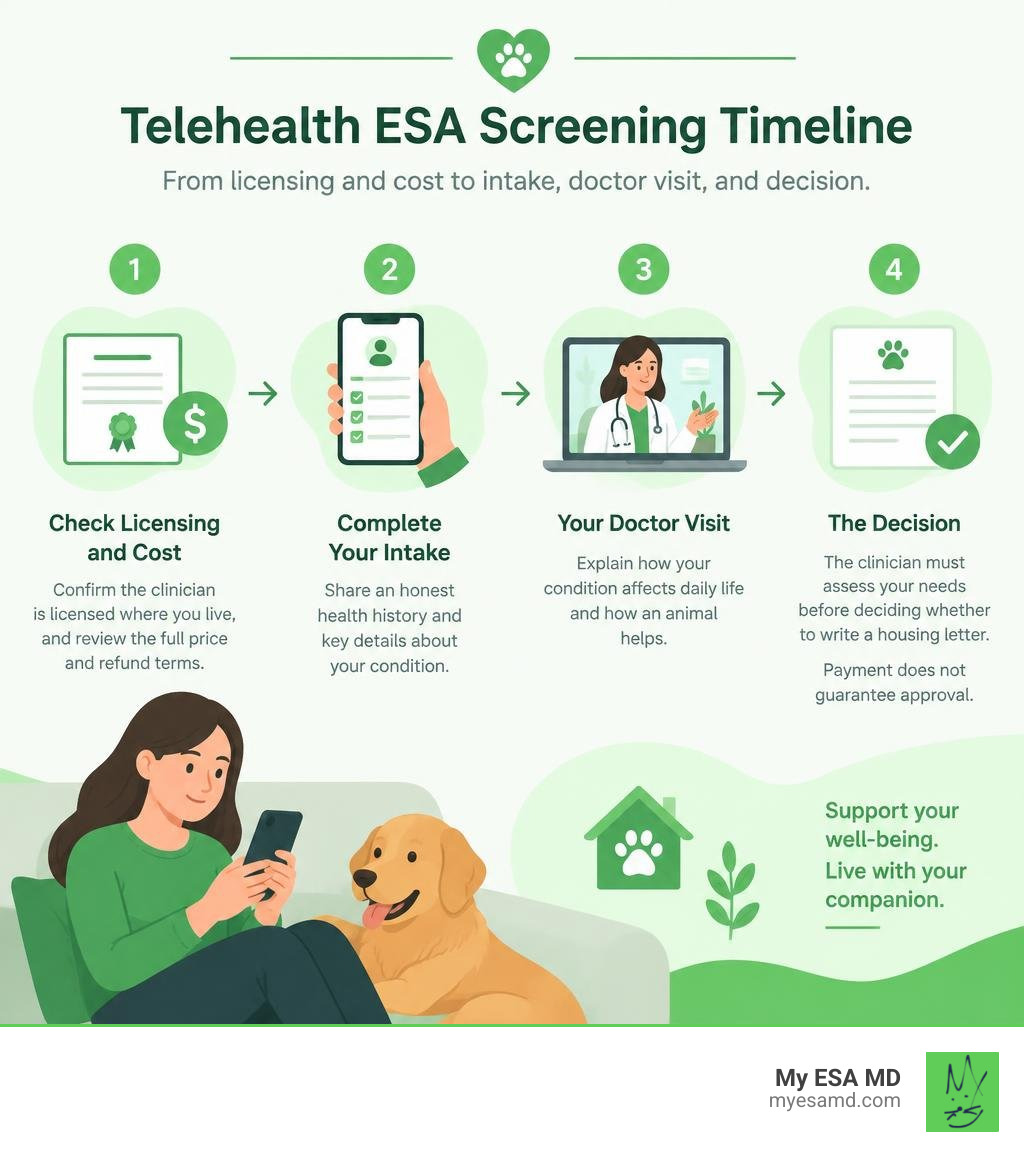
Virtual consultations offer equal clinical rigor to traditional office visits when conducted by licensed practitioners. Through secure digital intake portals and real-time clinical evaluations, patients can candidly discuss their functional challenges from the privacy and comfort of home. This approach is especially valuable for people whose symptoms make in-person appointments difficult, such as those managing severe social anxiety, agoraphobia, or post-traumatic stress disorder. By removing barriers like transportation, waiting rooms, and rigid scheduling, telehealth helps more individuals access the behavioral health support they need while maintaining the same diagnostic standards expected in a physical clinic.
Telehealth Access and Clinical Standards for ESA Evaluations
Remote healthcare has evolved from an emergency convenience into a fundamental pillar of modern medicine. According to health system data compiled by the Health Care Cost Institute, over 80% of ESI enrollees used Evaluation and Management services in 2021, with primary care and telehealth emerging as the primary drivers of routine consultations. Among young adults aged 18 to 34, telehealth visits accounted for 21% of all evaluation and management encounters—the largest share of any demographic.
Telemedicine utilization is equally pronounced in behavioral health. While behavioral health visits made up 12% of all evaluation services across insured adults, they represented 21% of services among pediatric populations. Remote consultations allow individuals coping with chronic stress, generalized anxiety disorder, major depression, and post-traumatic stress disorder to seek clinical support without the friction of travel, waiting rooms, or geographic restrictions.
Evaluating emotional support animal requests requires strict clinical standards. An emotional support animal provides therapeutic comfort that alleviates one or more identified symptoms of an individual's mental or emotional disability. A clinician conducts an individualized assessment to determine whether an emotional support animal is medically appropriate. Housing accommodation requirements depend on applicable law.
An ESA recommendation should reflect the clinician’s individualized medical judgment. Clinicians evaluate how specific psychological challenges impair baseline activities such as sleep hygiene, social engagement, and emotional regulation, to determine whether an ESA is medically appropriate. This means a telehealth ESA evaluation is not a rubber-stamp process. The clinician must review your history, ask targeted questions about your symptoms, and document a clear clinical rationale connecting your condition to the therapeutic presence of an animal. Only after that assessment can a legitimate housing accommodation letter be issued.
Step-by-Step Guide to a Telehealth ESA Evaluation
Navigating an online assessment should be straightforward and transparent. We believe patients deserve a structured, supportive experience that prioritizes clinical integrity over bureaucratic confusion.

Understanding who is eligible for an emotional support animal starts with recognizing that qualification depends on whether a mental or emotional impairment substantially limits one or more major life activities, such as sleeping, concentrating, socializing, or working.
| Evaluation Stage | Initial Phone or Email Contact | Telehealth Clinician Evaluation |
|---|---|---|
| Primary Focus | General information, symptoms, and pet details | Direct clinical interview and functional assessment |
| Patient Action | Share your pet’s name, breed, and sex; discuss symptoms now or with the physician | Discussing emotional challenges and human-animal bond |
| Who Helps You | Answer questions and arrange the physician consultation | Diagnostic review, symptom verification, and treatment planning |
| Output | Consultation arrangements and an emailed invoice | Formal clinical determination regarding housing accommodation |
| Time Required | Confirm timing with the team | Thorough telehealth consultation |
Preparing for Your Telehealth ESA Evaluation Appointment
To ensure a productive visit, prepare ahead of time by reflecting on how your mental health symptoms interfere with your day-to-day life. Reviewing the clinical role of an emotional support animal can help clarify how an animal's presence directly mitigates specific symptoms like panic attacks, isolation, or sleep disturbances.
We structure how it works around simple, practical preparation:
- Document Functional Limitations: Note specific daily challenges, such as chronic insomnia, severe social anxiety, or focus difficulties.
- Detail the Human-Animal Bond: Be prepared to explain how your pet helps soothe physiological distress or encourages healthy routines.
- Gather Clinical History: Have information ready regarding past therapy, current medications, or previous psychiatric diagnoses.
Taking a few minutes to organize these details before your appointment can make the conversation more productive. The clinician will use your responses to understand the severity and frequency of your symptoms, how they affect your ability to function, and whether an emotional support animal plays a meaningful role in your care. Honest, specific answers help the doctor make an accurate clinical determination.
Clinical Determination and Documentation Delivery
During the appointment, the physician conducts a comprehensive evaluation based on recognized diagnostic criteria. If the clinician establishes that an emotional support animal is a necessary component of your mental health care, they can provide a letter documenting medical necessity for use in a housing accommodation request.
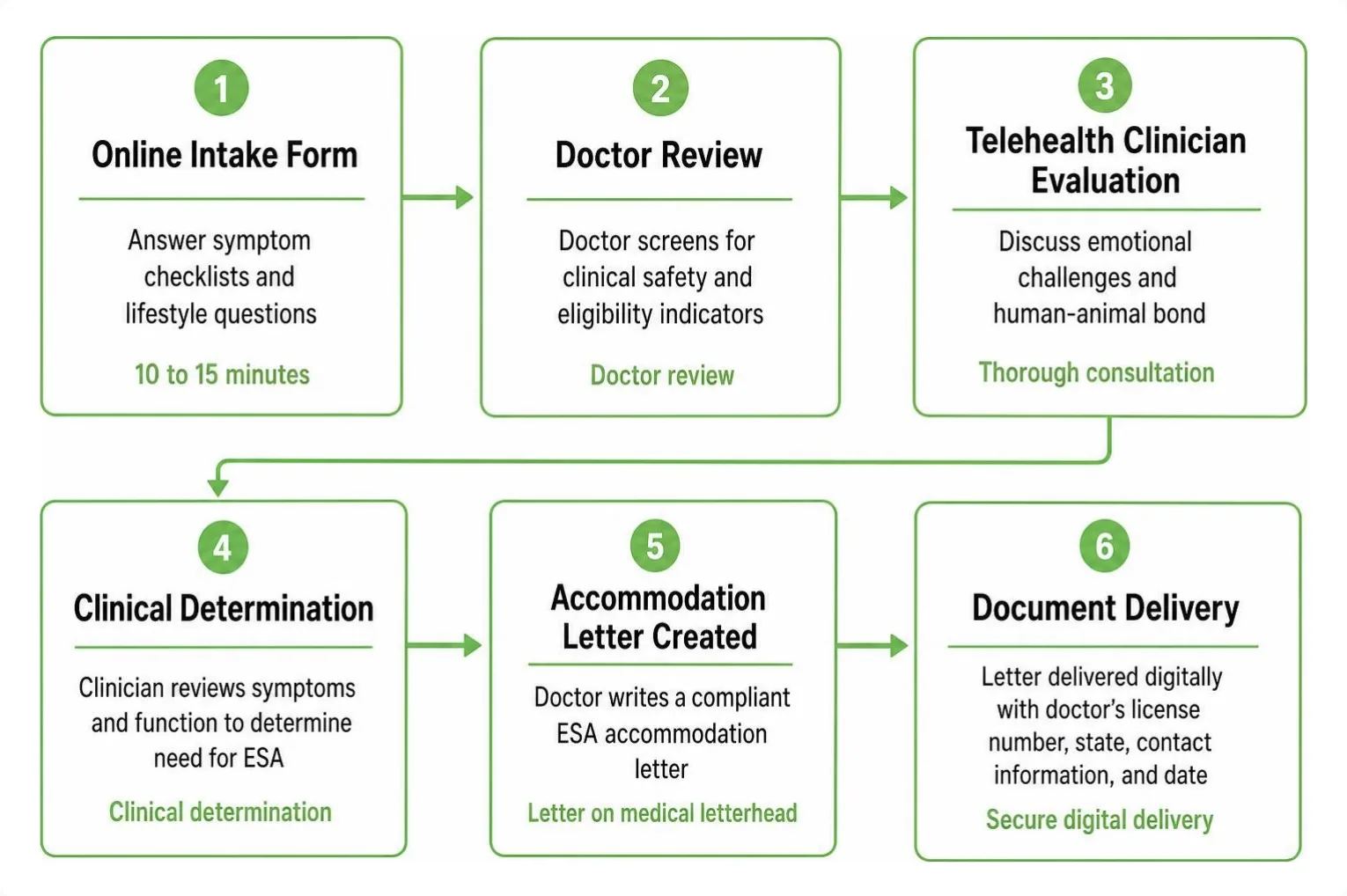
Once approved, you can securely get your ESA letter delivered digitally on official medical letterhead, including the doctor’s license number, state jurisdiction, contact information, and date of issuance. The letter from the doctor who evaluates you through My ESA MD includes a statement of medical necessity without disclosing personal details about your diagnosis. It can support a housing accommodation request, but the applicable protections and documentation requirements depend on where you live.
Pricing Breakdown, Hidden Fees, and Avoiding Online ESA Scams
The rise of virtual care has unfortunately attracted predatory websites advertising instant certificates, fake registries, or lifetime passes. ESA registrations, certifications, and ID cards generally do not establish legal housing rights. Look for documentation based on a real medical evaluation rather than an automated certificate.
Common warning signs of fraudulent ESA websites include:
- Promises of immediate instant approval without talking to a licensed physician or therapist.
- Upselling unnecessary physical merchandise like official-looking badges, vests, or national registration numbers.
- Requiring recurring monthly or annual membership fees to keep a letter active.
- Clinicians writing letters for states where they hold no active professional medical license.
- Refusal to provide landlord verification assistance or transparent refund policies if an applicant does not qualify.
At My ESA MD, we operate as a family-run, doctor-led service offering transparent flat-fee pricing with no hidden subscriptions, backed by a complete money-back guarantee if our physicians determine you do not qualify. Our evaluation fee covers the full clinical process: initial contact by phone or email, the telehealth consultation with a licensed physician, and the ESA letter if medically appropriate. There are no surprise charges for document delivery, landlord verification support, or follow-up questions.
Verifying Legitimacy: How to Ensure Your Telehealth ESA Evaluation Is Compliant
A legitimate housing accommodation document must come from a licensed healthcare professional who has evaluated your condition within their licensed jurisdiction. As part of providing more than just an ESA letter, My ESA MD connects you with a licensed physician for an individualized medical evaluation and provides follow-up verification support if a housing provider requests confirmation of your provider’s credentials. Legitimate clinicians stand behind their diagnostic evaluations, providing the administrative follow-up necessary to satisfy reasonable landlord verification requests without imposing unexpected surcharge fees.
Before you pay for any telehealth ESA evaluation, confirm that the service clearly identifies the licensed professional who will conduct your assessment, discloses the total cost upfront, and explains what happens if you do not qualify. A trustworthy provider will answer these questions directly rather than hiding behind vague terms or automated chatbots.
Frequently Asked Questions About Remote ESA Assessments
Find answers to common questions about remote assessments and housing rights in our FAQ.
Conclusion
Telemedicine has revolutionized behavioral healthcare, providing reliable and accessible pathways for individuals seeking legitimate clinical accommodations. A proper evaluation helps determine whether an ESA is medically appropriate and can provide documentation for a housing accommodation request. It does not guarantee acceptance; check the current requirements and protections that apply where you live.
To learn more about us, our family-run team, and our commitment to medical ethics, visit our About Us page. If you are ready for a secure, doctor-led assessment, start your legitimate online assessment with My ESA MD today. Licensed physicians take the time to understand your needs, answer your questions, and determine whether an emotional support animal is an appropriate part of your treatment plan.
Ready to Talk to a Doctor?
Book a telehealth evaluation with a licensed MD. One flat fee, no memberships, and real people who answer the phone.
Approved by: Dr. Rick Rieser, MD — Medical Director, My ESA MD. Stanford-trained physician, 30+ years of clinical experience.