
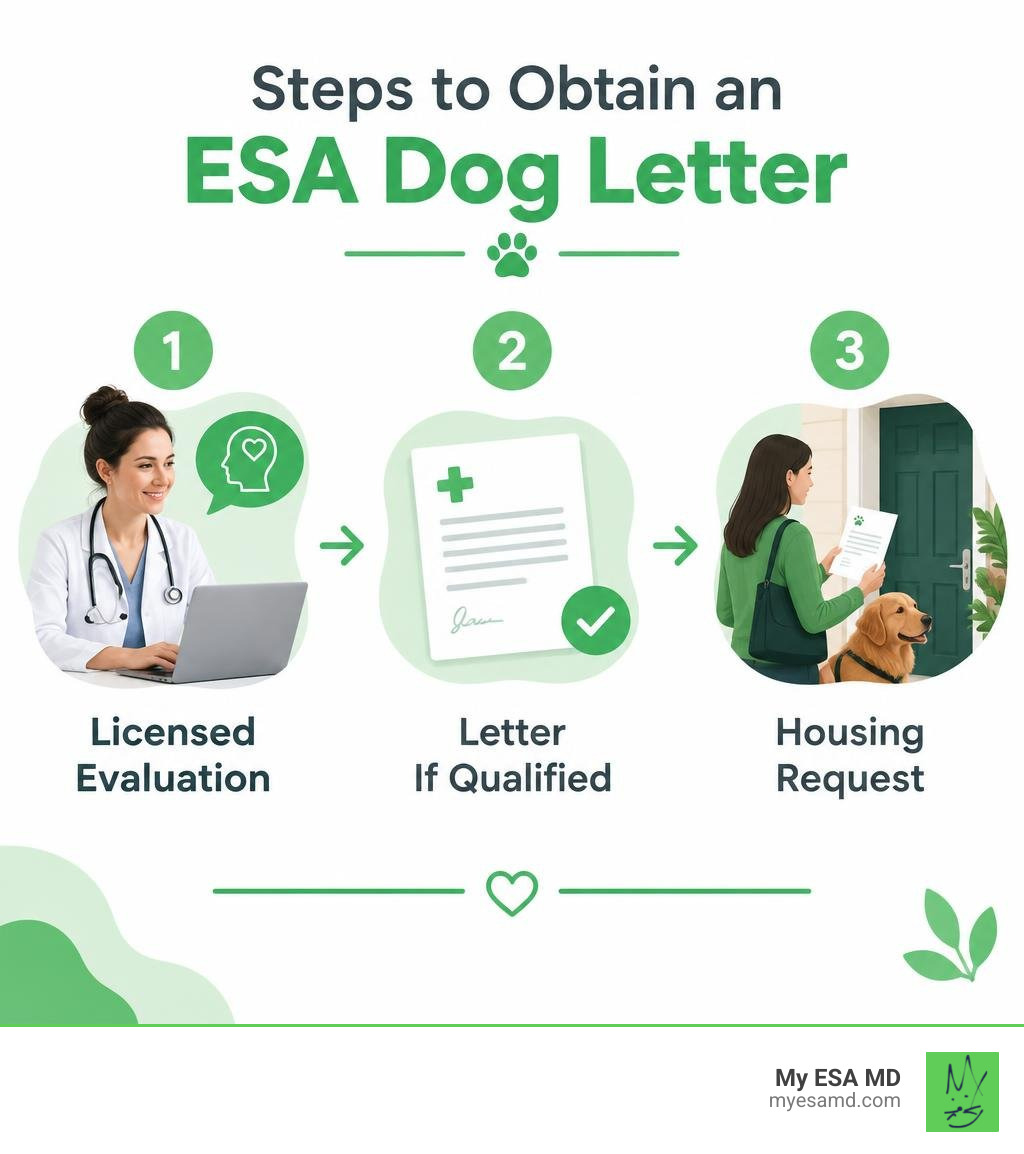
To get ESA dog letters for housing, start with an evaluation by a licensed health care professional. If you qualify, they can write a letter documenting your disability-related need for your dog. Give that letter to your landlord when you request an accommodation. A registry, certificate, or ID card is not a substitute.
A valid letter can support a request to keep your dog in housing that normally bans pets, but it does not guarantee approval.
I'm Joscelyn Rieser, director at My ESA MD, where licensed physicians provide telehealth evaluations for ESA dog letters. My work coordinating telehealth services helps me explain the paperwork and process in plain language.
The bond between humans and their canine companions is powerful. In fact, studies show that 74% of ESA owners report significant improvement in mental health symptoms. Today, there are approximately 200,000 documented emotional support animals across the United States, and their numbers have surged by over 300% in the past decade.
Because of this rising demand, navigating the paperwork can feel overwhelming. About 60% of ESA letters originate from online platforms, but their legitimacy varies dramatically. Understanding the legal landscape ensures you protect both your mental well-being and your housing security.
Understanding ESA Dog Letters and Qualifying Conditions

An Emotional Support Animal (ESA) is a companion animal that provides therapeutic benefit, comfort, and emotional stability to an individual experiencing a mental or emotional disability. Unlike general pets, ESAs serve an integral clinical function: mitigating debilitating symptoms such as panic attacks, chronic depressive episodes, or severe social anxiety.
To establish this accommodation under federal law, you must have legitimate documentation written by an authorized health professional. Learning who is eligible for an emotional support animal starts with understanding the broad range of qualifying conditions recognized under the Diagnostic and Statistical Manual of Mental Disorders (DSM-5), including:
- Generalized Anxiety Disorder (GAD) and panic disorders
- Major Depressive Disorder (MDD) and persistent depressive conditions
- Post-Traumatic Stress Disorder (PTSD) and trauma-related conditions
- Bipolar disorder and mood dysregulation
- Severe chronic insomnia and stress-related conditions
- Social anxiety disorder and phobias
Only state-licensed health professionals—including licensed Medical Doctors (MDs), psychiatrists, clinical psychologists, licensed clinical social workers (LCSWs), and licensed professional counselors (LPCs)—possess the legal authority to evaluate patients and issue valid documentation. Through modern telehealth evaluations, licensed medical doctors can evaluate your medical history remotely, establishing a valid clinical relationship and issuing legally compliant letters.
Essential Requirements for Valid ESA Dog Letters
A legally defensible ESA letter is a clinical medical document, not an informal note. Housing providers and property management companies inspect these letters closely. A legitimate ESA letter should include:
- Official Letterhead: The document must display the medical provider's formal clinic branding, practice name, and physical office address.
- Practitioner Information: The provider's full name, medical credential (such as MD), and active state medical license number must be visible.
- Jurisdiction & Licensing State: Clear indication that the clinician is actively licensed to practice within the state where the patient resides.
- Date of Issuance: An exact date establishing when the clinical evaluation occurred.
- Explicit Clinical Recommendation: A formal statement declaring that the patient has a diagnosed mental or emotional impairment that substantially limits one or more major life activities, and that the presence of the dog alleviates specific symptoms.
- Direct Contact Details: Working clinical phone numbers and email addresses so housing providers can verify document authenticity.
ESA Letters vs. Service Dog Certifications
A common point of confusion is the distinction between an emotional support dog and a service dog. These animals operate under entirely different legal statutes, training requirements, and public access rights.
| Feature | Emotional Support Dog (ESA) | Psychiatric Service Dog (PSD) / Service Dog |
|---|---|---|
| Primary Federal Law | Fair Housing Act (FHA) | Americans with Disabilities Act (ADA) |
| Specialized Training Required | No specialized task training required | Must be individually trained to perform specific tasks |
| Housing Protections | Often exempt from no-pet rules and pet rent, depending on federal, state, and local law | Exempt from no-pet rules and pet rent |
| Public Accommodations (Stores, Restaurants) | No automatic public access rights | Full legal access to all public spaces |
| Commercial Airline Travel | Treated as standard pets by airlines | Protected under Air Carrier Access Act (fly free in cabin) |
| Required Documentation | Valid ESA Letter from a licensed clinician | Self-attestation / DOT Service Animal Air Transportation Form |
While emotional support dogs do not require task-specific training, their presence delivers documented therapeutic relief. Understanding this difference helps prevent awkward public confrontations or unlawful access claims.
Federal Housing Protections and Travel Regulations
The primary legal shield protecting emotional support animals is the Fair Housing Act (FHA). The FHA itself has not changed, but HUD withdrew its earlier assistance-animal guidance in September 2025, and since May 2026 its enforcement office has focused animal-related cases on trained assistance animals. Private lawsuits under the FHA, along with state and local laws, still protect many ESA owners.
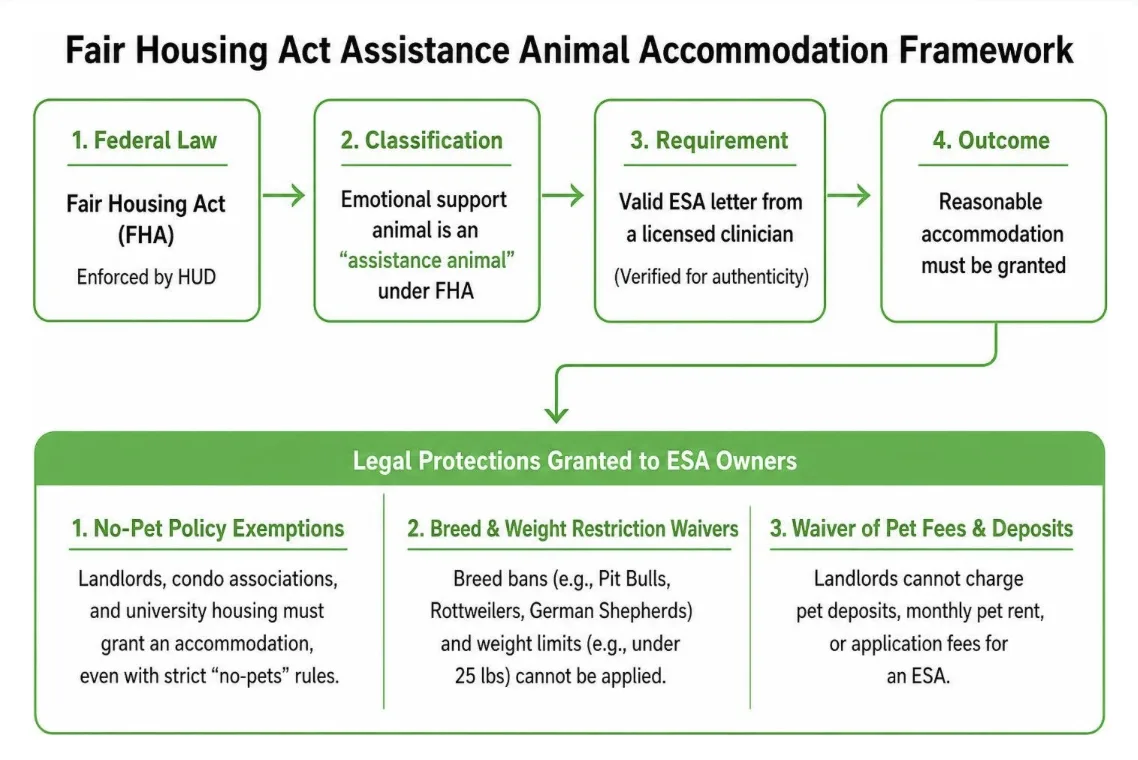
When you present a valid ESA letter to a housing provider, the applicable law may grant several protections:
- No-Pet Policy Exemptions: Depending on your state, landlords, condo associations, and university housing facilities may be required to grant a reasonable accommodation, allowing your dog to reside with you even in buildings with strict "no-pets" rules. In states without their own ESA protections, this accommodation may not be available.
- Breed and Weight Restriction Waivers: Policies banning specific breeds (such as Pit Bulls, Rottweilers, or German Shepherds) or imposing strict weight ceilings (e.g., under 25 lbs) generally cannot be applied to legitimate assistance animals.
- Waiver of Pet Fees and Deposits: Where an accommodation is required, landlords are prohibited from charging initial pet deposits, recurring monthly pet rent, or pet application fees for an ESA.
Beyond housing, pet owners often find therapeutic benefits beyond basic accommodations in their daily routines, as the consistent companionship reduces isolation and encourages healthy daily habits.
Air Travel Regulations
Travel rules changed substantially when the U.S. Department of Transportation (DOT) revised the Air Carrier Access Act (ACAA). Under current rules, airlines are no longer federally required to accommodate emotional support animals free of charge in the passenger cabin.
Airlines now treat ESAs as standard companion pets subject to carry-on fees, weight restrictions, and carrier rules, reserving free cabin access exclusively for trained service animals (including psychiatric service dogs).
How to Get Legitimate ESA Dog Letters Step-by-Step

Securing a compliant recommendation does not require stressful office visits or confusing administrative hurdles. Across the industry, the average cost of obtaining a legitimate ESA letter ranges from $100 to $200. We structure our clinical intake to make this process simple, transparent, and doctor-led.
- Complete a Mental Health Intake: Begin by answering questions regarding your mental health history, symptoms, daily challenges, and how your dog supports your emotional stability.
- Clinical Evaluation: A state-licensed Medical Doctor evaluates your medical assessment to determine your clinical eligibility for an assistance animal.
- Document Issuance: If the physician determines that an emotional support animal is a necessary component of your care, your official ESA housing letter is generated on formal clinic letterhead, including all required state license credentials.
You can learn more about our streamlined telehealth evaluation process or get started directly by applying for a valid ESA letter. As a family-run, doctor-led service, we provide transparent flat-fee pricing, zero recurring monthly subscription traps, and a complete money-back guarantee if our medical team determines you do not qualify.
Red Flags and Scams in Fake ESA Dog Letters
Because online services issue roughly 60% of ESA documentation, deceptive commercial operators frequently target vulnerable pet owners. Recognizing common scam tactics protects you from fraudulent purchases and legal exposure:
- Instant Approval Without Clinician Review: Any website offering an "instant ESA letter in 5 minutes" without an actual evaluation by a licensed practitioner is selling fraudulent paperwork.
- "Official" National Registries and ID Cards: The federal government and HUD do not recognize, maintain, or require any registry, database, badge, or certificate for emotional support animals. Sites selling "lifetime registration certificates" are selling meaningless novelty items.
- Lifetime Validity Guarantees: Legitimate medical documentation requires periodic assessment; no doctor can ethically certify a medical need for the rest of your life.
- Non-Licensed "Certifiers": Documents signed by unqualified operators without verifiable state medical license credentials will be rejected during landlord verification.
Using fraudulent ESA paperwork carries serious risks, including immediate rejection of housing accommodations, formal eviction proceedings for unauthorized pets, and civil fraud liability in states that penalize pet misrepresentation.
Document Validity, Landlord Verification, and Renewals
Federal law sets no expiration date for ESA letters, but housing providers typically consider an ESA housing letter valid for 12 months from the date of issuance. Because mental health conditions fluctuate over time, many landlords request updated documentation annually upon lease renewal to verify an ongoing therapeutic need.
When you submit your paperwork, property managers frequently follow verification protocols. Landlords are legally permitted to:
- Contact the issuing health professional to confirm the authenticity of the letterhead and signature.
- Verify that the practitioner holds an active, unencumbered license in their state.
However, fair housing laws limit how much of your personal medical history a landlord may ask for, and HIPAA requires your health care provider to keep your records private. Landlords cannot legally:
- Demand access to your private medical records or clinical psychotherapy notes.
- Demand an explanation of your specific underlying diagnosis or trauma history.
- Insist that your medical provider discuss your clinical details beyond confirming that they wrote the letter and that you have a qualifying disability-related need.
If you have additional questions regarding how landlords confirm paperwork, check our comprehensive frequently asked questions about verification or browse our blog for guides on housing accommodations and tenant protections.
Frequently Asked Questions About ESA Dog Letters
Yes, but only under narrow exceptions recognized under the Fair Housing Act. A housing provider may deny an ESA accommodation if:
- The specific animal poses a direct threat to the health and safety of others that cannot be eliminated by reasonable measures.
- The specific animal would cause substantial physical damage to the property of others that cannot be reduced by reasonable measures.
- The accommodation imposes an undue financial or administrative burden on the housing provider.
- The property is an owner-occupied building with four or fewer units, or a single-family home rented without a real estate broker (exempt under specific FHA provisions).
Landlords cannot reject an ESA based on general breed stereotypes, speculative concerns, or simple personal preference.
Conclusion
Securing a legitimate ESA dog letter protects your rights as a tenant while ensuring your canine companion can remain by your side. By working directly with licensed medical doctors and avoiding deceptive online registry scams, you can navigate housing requirements with complete confidence and peace of mind.
If you are ready to secure a legally valid, doctor-issued accommodation letter backed by licensed medical doctors, explore the My ESA MD telehealth platform today. Our doctor-led team is here to support you with flat-fee pricing, rapid same-day turnaround in most states (California residents with dogs follow a 30-day process required by state law), and the compassionate care you deserve.
Ready to Get Your ESA Dog Letter?
Book a telehealth evaluation with a licensed MD. One flat fee, no memberships, and real people who answer the phone.
Approved by: Dr. Rick Rieser, MD — Medical Director, My ESA MD. Stanford-trained physician, 30+ years of clinical experience.