
Emotional support animals and psychiatric service animals can both support people with mental-health conditions, but they differ in purpose, training, documentation, and legal rights. An emotional support animal provides comfort and support through companionship, while a psychiatric service animal is a dog individually trained to perform specific tasks related to a person's disability. Understanding those differences helps you determine which type of animal, if any, fits your needs.
I’m Joscelyn Rieser, director at My ESA MD, where I help explain emotional support animals and doctor-issued housing letters.
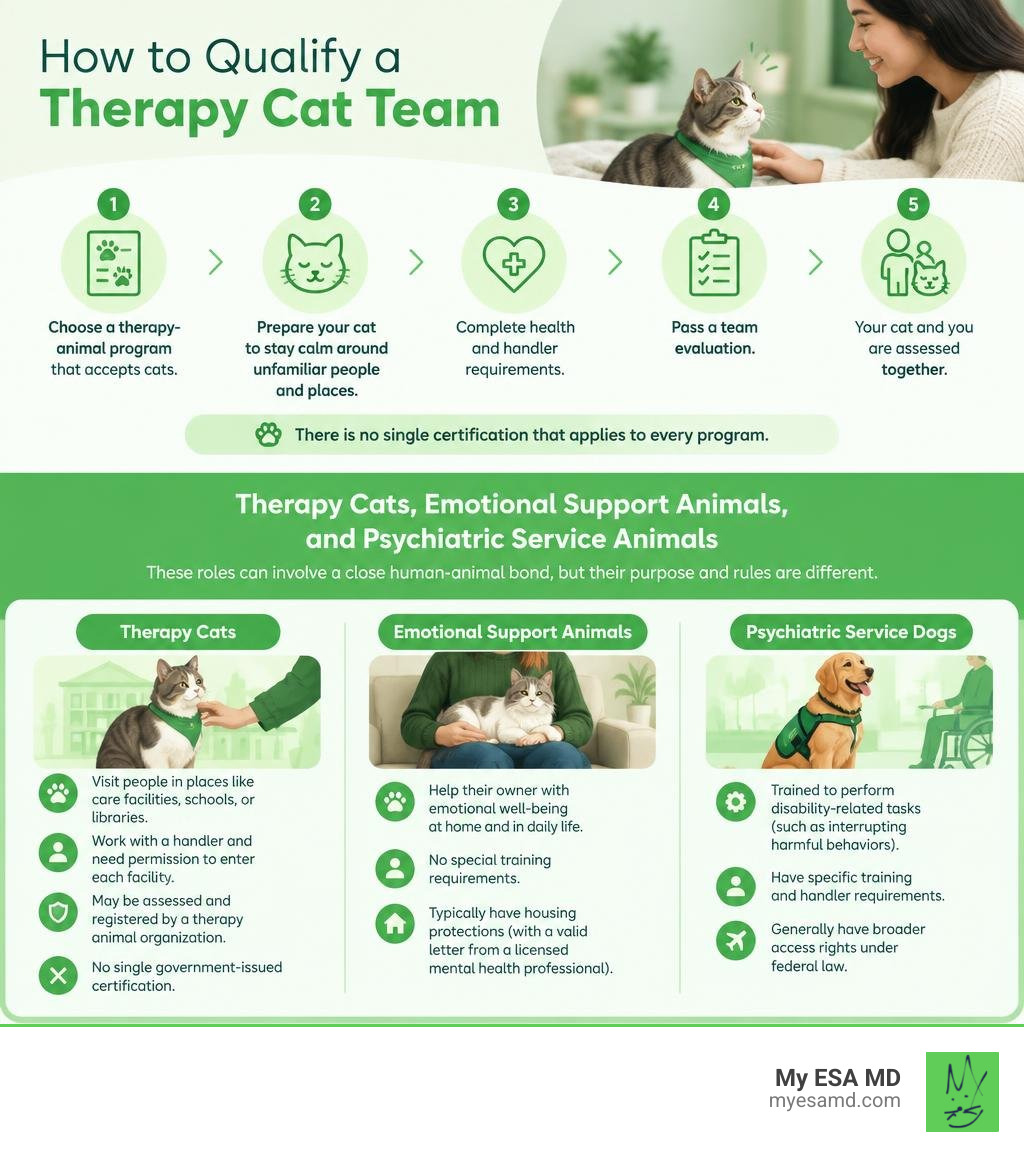
Emotional Support Animals and Psychiatric Service Animals at a Glance
Both types of animals may help a person manage a disability-related need, but they are not interchangeable.
- Emotional support animals (ESAs) provide comfort, companionship, and emotional support to a person with a disability-related need. They do not need task training. In qualifying housing situations, a person may request a reasonable accommodation for an assistance animal; approval depends on the applicable law and circumstances. Read about what an emotional support animal is and emotional support animal housing rights.
- Psychiatric service animals are dogs individually trained to perform tasks related to a person's disability, such as interrupting a harmful behavior, creating space in a crowd, or reminding someone to take medication. Under the Americans with Disabilities Act, service animals are generally dogs trained to do work or tasks for a person with a disability.
What is the main difference in purpose?
An ESA supports its owner through presence and companionship in daily life. A psychiatric service animal assists its handler by performing trained tasks that mitigate the effects of a disability. That distinction — companionship versus trained tasks — drives most of the differences in requirements and rights.
What is the main difference in requirements?
An ESA typically requires documentation from a licensed healthcare professional establishing a disability-related need. A psychiatric service animal requires individual task training, and the handler must be able to explain the tasks the dog is trained to perform. Neither type of animal gains rights simply because it is calm, affectionate, or comforting.
What is the main difference in rights?
ESAs may be considered for housing accommodations where applicable law provides for them, but they do not have general public access rights. Psychiatric service animals, as service animals under the ADA, have public access rights when they are under the handler's control and meet applicable requirements. Housing and public-access rules are separate, and neither category automatically grants both.
Training and Documentation Differences Between Emotional Support Animals and Psychiatric Service Animals
Training and documentation are two of the clearest ways to tell these categories apart. An emotional support animal is not required to complete task training, while a psychiatric service animal must be individually trained to perform specific tasks related to a person's disability.

What training does each type of animal require?
An emotional support animal provides comfort and support through companionship and presence. It does not need to learn specific tasks, pass a task test, or wear a vest or other equipment to be considered an emotional support animal.
A psychiatric service animal is a dog that has been individually trained to do work or perform tasks for a person with a disability. Examples include interrupting a harmful behavior, creating space in a crowd, guiding a person away from a stressful situation, or reminding someone to take medication. The training must be specific to the handler's needs, and the dog must work under the handler's control.
What documentation applies to each type of animal?
An emotional support animal typically requires documentation from a licensed healthcare professional establishing a disability-related need. That documentation is most often used when requesting a housing accommodation where applicable law provides for one.
A psychiatric service animal does not need an emotional support animal letter for public access. Under the Americans with Disabilities Act, a business may ask only the limited questions allowed for service animals, and the handler must be able to explain the tasks the dog is trained to perform. A certificate, vest, or identification card is not required by the ADA for public access.
Why does the distinction between companionship and trained tasks matter?
Companionship alone does not make an animal a psychiatric service animal, and a label alone does not create rights. A dog that provides comfort becomes a psychiatric service animal only after individual training to perform disability-related tasks. Likewise, an emotional support animal letter does not grant public access rights. The animal's actual function determines which rules apply.
Housing and Public Access Rights Compared
Housing and public access are separate issues, and the two animal categories are treated differently in each setting. Understanding that separation helps prevent confusion about where an animal may go and what a housing provider or business may require.

How do housing rules differ?
In qualifying housing situations, a person may request a reasonable accommodation for an emotional support animal where applicable law provides for one. Approval depends on the applicable law, the housing situation, and whether the request is supported by documentation of a disability-related need.
Psychiatric service animals are also covered in housing contexts under applicable housing law, but their status as trained service animals is separate from the emotional support animal documentation process. Housing providers may follow their own lawful process for evaluating accommodation requests, and the rules that apply can vary by jurisdiction and housing type.
How do public access rules differ?
Emotional support animals do not have general public access rights under the ADA. Restaurants, stores, and other businesses may exclude emotional support animals from public areas, even if the animal is calm and well behaved.
Psychiatric service animals, as service animals under the ADA, do have public access rights when they are under the handler's control, are harnessed or leashed unless that interferes with the work, and meet applicable requirements. That access applies to places open to the public, subject to lawful exclusions that apply to service animals generally.
What should you check before relying on a particular right?
Before assuming an animal may accompany you somewhere, check the specific setting and the current law that applies there. Ask whether you need housing documentation, whether the animal is trained to perform specific tasks, and whether the location is housing, a public business, employment, or another setting with its own rules. Keeping housing and public access separate is the safest way to understand what each category of animal can and cannot do.
How to Decide Which Animal Fits Your Needs
Choosing between an emotional support animal and a psychiatric service animal starts with the specific need you want the animal to meet.
Consider asking:
- Do you need companionship and comfort, or trained tasks? An ESA provides support through presence. A psychiatric service animal performs specific, trained tasks related to a disability.
- Where do you need the animal most? ESAs are primarily relevant to housing accommodations where applicable law provides for them. Psychiatric service animals have public access rights under the ADA when they meet service-animal requirements.
- What training is involved? ESAs do not require task training. Psychiatric service animals require individual task training and must work under the handler's control.
- What documentation applies? An ESA typically requires documentation from a licensed healthcare professional establishing a disability-related need. A psychiatric service animal does not need an ESA letter for public access, and the handler must be able to explain the dog's trained tasks.
An animal's role depends on its training and function, not on a label alone. A dog that provides comfort does not become a psychiatric service animal until it is individually trained to perform disability-related tasks. Likewise, an ESA letter does not create public access rights.
If you are unsure which category fits, focus on the tasks you need, the places you need to go, and the documentation and training each category requires. That approach helps you make a decision based on function and applicable law rather than assumptions about what an animal can do.
Frequently Asked Questions About Emotional Support Animals and Psychiatric Service Animals
Conclusion
Emotional support animals and psychiatric service animals differ in purpose, requirements, and rights. ESAs provide companionship and support related to a disability-related need and are primarily relevant to housing accommodations. Psychiatric service animals are dogs individually trained to perform tasks related to a disability and have public access rights under the ADA. Choosing the right category depends on what you need the animal to do and where you need it to go.
My ESA MD connects patients with licensed medical doctors for emotional support animal evaluations and housing letters. Learn about emotional support animals and how they differ from psychiatric service animals.
Is an Emotional Support Animal Right for You?
Talk with a licensed MD about whether an emotional support animal is right for you. One flat fee, no memberships, and real people who answer the phone.
Approved by: Dr. Rick Rieser, MD — Medical Director, My ESA MD. Stanford-trained physician, 30+ years of clinical experience.