
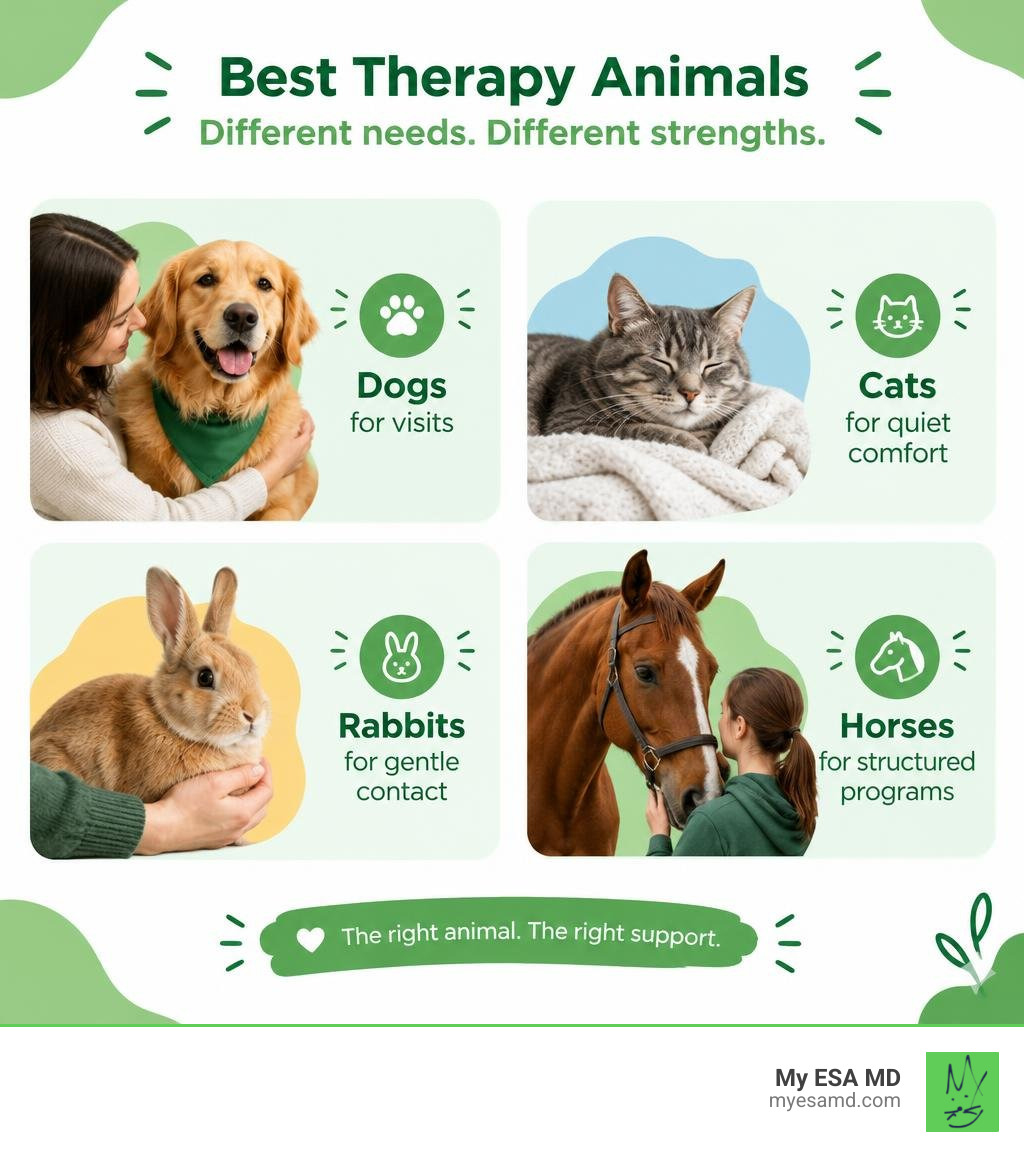
The best therapy animals are calm, friendly individuals that enjoy being around people. Dogs are often a strong fit for visits to hospitals or schools because they can learn to stay relaxed in busy places. Cats may offer quiet comfort, while rabbits can suit gentle, supervised interactions. Horses are used in some structured therapy programs. Temperament matters more than species or breed: an animal should feel safe and at ease in its role.
If you want support at home, you may be looking for an emotional support animal rather than a visiting therapy animal. The right choice also needs to fit your space, schedule, and budget.
I'm Joscelyn Rieser, director at My ESA MD, where I help make doctor-led emotional support animal housing evaluations easier to understand and access. My work has taught me that choosing among the best therapy animals starts with understanding what kind of support you need.
Understanding the Differences: Therapy Animals, Emotional Support Animals, and Service Animals
When discussing animals that help humans heal, terminology often gets blurred. People frequently interchange the terms "therapy animal," "emotional support animal" (ESA), and "service animal." However, each serves a distinct functional purpose, is governed by different legal frameworks, and requires different levels of training.
A service animal is defined strictly under the Americans with Disabilities Act (ADA) as a dog (and in rare instances, a miniature horse) individually trained to perform specific tasks directly related to an individual's disability. These tasks range from guiding the visually impaired and alerting deaf individuals to detecting drops in blood glucose levels or interrupting self-harm behaviors in psychiatric service dogs. Because they perform essential life-saving tasks, service animals are granted broad public access rights across stores, restaurants, planes, and workplaces.
In contrast, an emotional support animal (ESA) provides companionship, grounding, and relief from symptoms of mental or emotional conditions through its simple presence. An ESA does not require specialized task training. Depending on the state you live in, individuals with qualifying mental health conditions may have specific emotional support animal housing rights that require residential providers to make reasonable accommodations without pet fees or breed restrictions. However, ESAs do not possess public access rights to enter private businesses or grocery stores.
A therapy animal is trained alongside a handler to provide comfort, socialization, and affection to multiple people in designated institutional settings, such as hospitals, schools, hospice facilities, and disaster zones. Unlike service dogs, therapy pets do not have public access rights and do not live with individuals as assistive medical equipment. As noted in a systematic review on animal-assisted interventions, these animals act as therapeutic buffers, bridging communication gaps and soothing acute emotional distress in clinical environments.
| Feature | Service Animal | Emotional Support Animal (ESA) | Therapy Animal |
|---|---|---|---|
| Primary Role | Performs specialized tasks for one disabled handler | Provides therapeutic comfort to its owner at home | Visits multiple people in clinical/educational facilities |
| Training Required | Extensive, specialized disability-task training | No task training required (basic manners recommended) | Temperament testing, desensitization, handler training |
| Public Access Rights | Full public access (ADA protected) | No public access (Housing accommodations only) | Access only to invited/permitted facilities |
| Legal Framework | Americans with Disabilities Act (ADA) | Fair Housing Act (FHA) and state housing laws | No public access laws (Facility-by-facility consent) |
| Eligible Species | Dogs (and miniature horses) | Any common domestic companion animal | Dogs, cats, equines, rabbits, guinea pigs, etc. |
How Therapy Animals Differ from at-Home Support Animals
The key operational difference lies in the setting and recipient of care. Therapy animals operate outside their home, visiting environments like pediatric wards, rehabilitation centers, and assisted living communities. They must be comfortable traveling, interacting with dozens of strangers, and tolerating novel equipment like IV poles and wheelchairs.
At-home support animals, on the other hand, focus exclusively on their owner's emotional stability. For someone struggling with chronic anxiety, major depressive disorder, or social phobias, learning who is eligible for an emotional support animal can be a pivotal step in their mental health journey. While therapy animals need an extroverted, highly social disposition, an ESA simply needs to share a deep, grounding connection with its human in a private home setting.
Discovering the Best Therapy Animals for Mental Health and Emotional Well-Being

The range of species that participate in therapeutic work is broader than many realize. While canines remain the most prominent, cats, equines, and small herbivores can provide profound physiological and mental benefits. As outlined in a clinical guide to pet therapy, structured interactions with animals stimulate the production of serotonin and dopamine while reducing circulating stress hormones.
Top Canine Breeds Among the Best Therapy Animals
While any calm dog can excel, certain breeds consistently demonstrate the biddability, patience, and social confidence required for therapy and emotional support work:
- Golden Retrievers: Renowned for their eager-to-please nature, Goldens possess an innate tolerance and steady temperament, making them ideal for high-stress settings like hospitals and university campuses.
- Labrador Retrievers: Known for their emotional stability and trainability, Labradors handle chaotic environments with steady composure.
- Poodles (Standard, Miniature, and Toy): Poodles offer high intelligence and hypoallergenic coat qualities, which is crucial for medical facilities with strict sanitation standards.
- Cavalier King Charles Spaniels: Naturally gentle lap dogs, Cavaliers provide deep tactile comfort and are well-suited for memory care centers or quiet apartment settings.
- Pugs and Shih Tzus: Compact and affectionate, these companion breeds excel at cheering up pediatric patients and individuals in compact living environments.
Evaluating Feline Companions as the Best Therapy Animals
While therapy dogs dominate registration rosters, cats make exceptional therapy companions for those who respond to gentle, low-key interaction. According to research on the efficacy of therapy cats, outgoing cats form social bonds just as strong as canines, providing identical reductions in cortisol and anxiety.
The rhythmic frequency of a cat's purr (typically vibrating between 20 and 140 Hz) is associated with therapeutic relaxation and blood pressure stabilization. Spending just 10 minutes petting a cat measurably reduces stress markers. For individuals seeking home-based emotional support, cats are independent, quiet, and deeply attuned to subtle shifts in human emotions.
Small Animals, Equines, and Unique Species in Animal Therapy
Non-traditional species also play vital roles across specialized therapy sectors:
- Rabbits and Guinea Pigs: Because of their gentle nature and small size, rabbits provide quiet, tactile grounding for individuals with sensory processing challenges. According to comparative research on intervention species, small herbivores promote caregiving routines and emotional engagement, making them excellent ESAs for children who may be overwhelmed by larger animals.
- Miniature Horses and Equines: Equine-assisted psychotherapy (and hippotherapy) leverages horses to assist with motor tone, trauma recovery, and emotional regulation. Miniature horses are also increasingly trained to visit nursing homes, bringing comfort to bedridden residents.
- Miniature Pigs and Birds: As explored in stories of unusual therapy animals in clinical practice, miniature pigs serve as hypoallergenic support options, while birds provide vocal feedback and uplifting engagement for individuals with chronic illnesses.
Essential Temperament Traits and Science Behind Animal-Assisted Therapy

The physiological benefits of human-animal interaction are well documented. Physical contact with a calm animal triggers the release of oxytocin and endorphins, stimulates the parasympathetic nervous system, and lowers heart rate. Research shows that animal therapy programs help reduce depression progression and lower blood pressure in care home residents. These calming effects make animals particularly beneficial ESAs for senior citizens coping with isolation or age-related transitions.
According to veterinary standards for therapy pets, an animal must be evaluated for calm sociability, health, and resilience before participating in therapy programs. The ideal therapy animal exists in a balanced emotional state: socially engaged and welcoming, yet able to settle quietly on cue without showing signs of fear or excitement.
Behavioral Aptitude and Scientific Temperament Screening
Assessing an animal's readiness for therapeutic work requires objective behavioral screening rather than relying solely on breed pedigree.
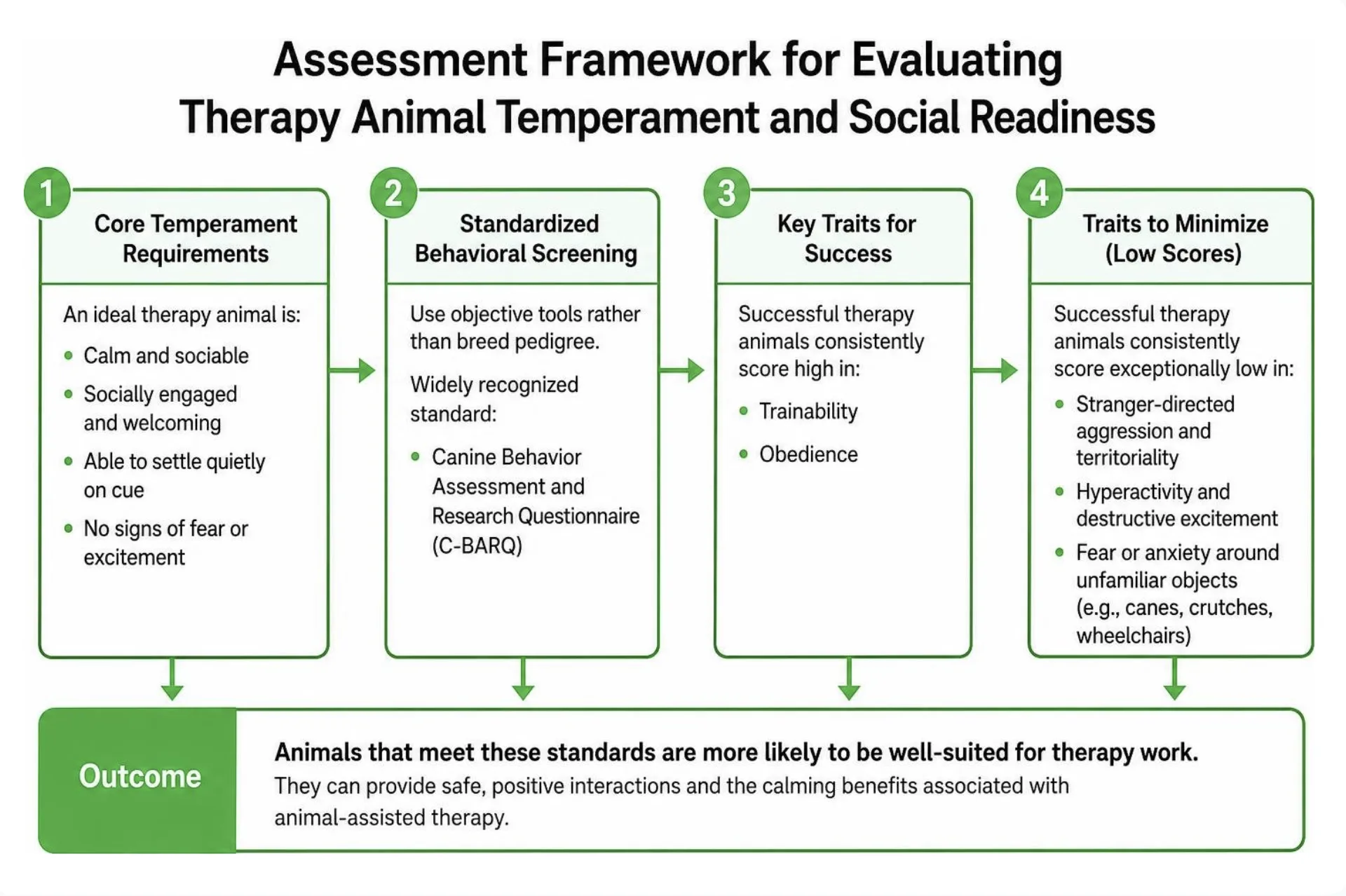
One widely recognized standardized tool is the Canine Behavior Assessment and Research Questionnaire (C-BARQ) (Sakurama et al., 2023). In studies evaluating certified therapy dogs, successful candidates consistently score high in trainability and obedience, while scoring exceptionally low in:
- Stranger-directed aggression and territoriality
- Hyperactivity and destructive excitement
- Fear or anxiety around unfamiliar objects (e.g., canes, crutches, wheelchairs)
- Separation anxiety and severe resource guarding
A therapy animal must welcome interactions from diverse groups of people without retreating or feeling distressed. An animal that merely tolerates strangers is not well suited for therapy work; they must genuinely enjoy social engagement.
How to Choose the Right Support or Therapy Animal for Your Lifestyle
Whether you want to train a pet for volunteer therapy visitation or seek an emotional support animal for personal wellness, matching the animal to your daily lifestyle is essential:
- Living Space: Large, high-energy breeds need space to exercise, while smaller dogs, cats, and rabbits thrive in compact apartments.
- Time Commitment: Puppies and active breeds require extensive daily training and enrichment. If your energy is limited by mental health symptoms, a lower-maintenance companion like an adult cat or rabbit may be a better match.
- Grooming and Allergies: Breeds with continuous hair growth (like Poodles) require regular professional grooming, whereas short-coated breeds need less maintenance but may shed dander.
- Financial Readiness: Responsible ownership means budgeting for quality nutrition, routine veterinary wellness checks, and preventative care.
If you are struggling with a mental health condition and find that an animal's presence relieves your symptoms at home, understanding how to get an ESA letter for housing can help you learn what protections may apply to you and your companion in your residence.
Frequently Asked Questions About Therapy and Support Animals
Conclusion
The connection between humans and animals provides meaningful support for emotional recovery and mental well-being. Whether it is a therapy dog visiting a hospital room, a miniature horse soothing trauma survivors, or an affectionate cat offering comfort at home, animals have an extraordinary ability to ease stress.
If an animal helps you navigate everyday emotional challenges at home, understanding what is an emotional support animal is an important first step. My ESA MD connects patients with licensed medical doctors through a transparent, doctor-led telehealth process designed to support your mental health journey. If the physician determines that an emotional support animal is appropriate, the provider issues your housing letter the same day, except in states like California where a waiting period is required.
References
Sakurama M, Ito M, Nakanowataru Y, Kooriyama T. "Selection of Appropriate Dogs to Be Therapy Dogs Using the C-BARQ.." Animals : an open access journal from MDPI, 2023. PMCID PMC10000031.
Does an Animal Help You at Home?
Talk with a licensed MD about whether an emotional support animal is right for you. One flat fee, no memberships, and real people who answer the phone.
Approved by: Dr. Rick Rieser, MD — Medical Director, My ESA MD. Stanford-trained physician, 30+ years of clinical experience.