
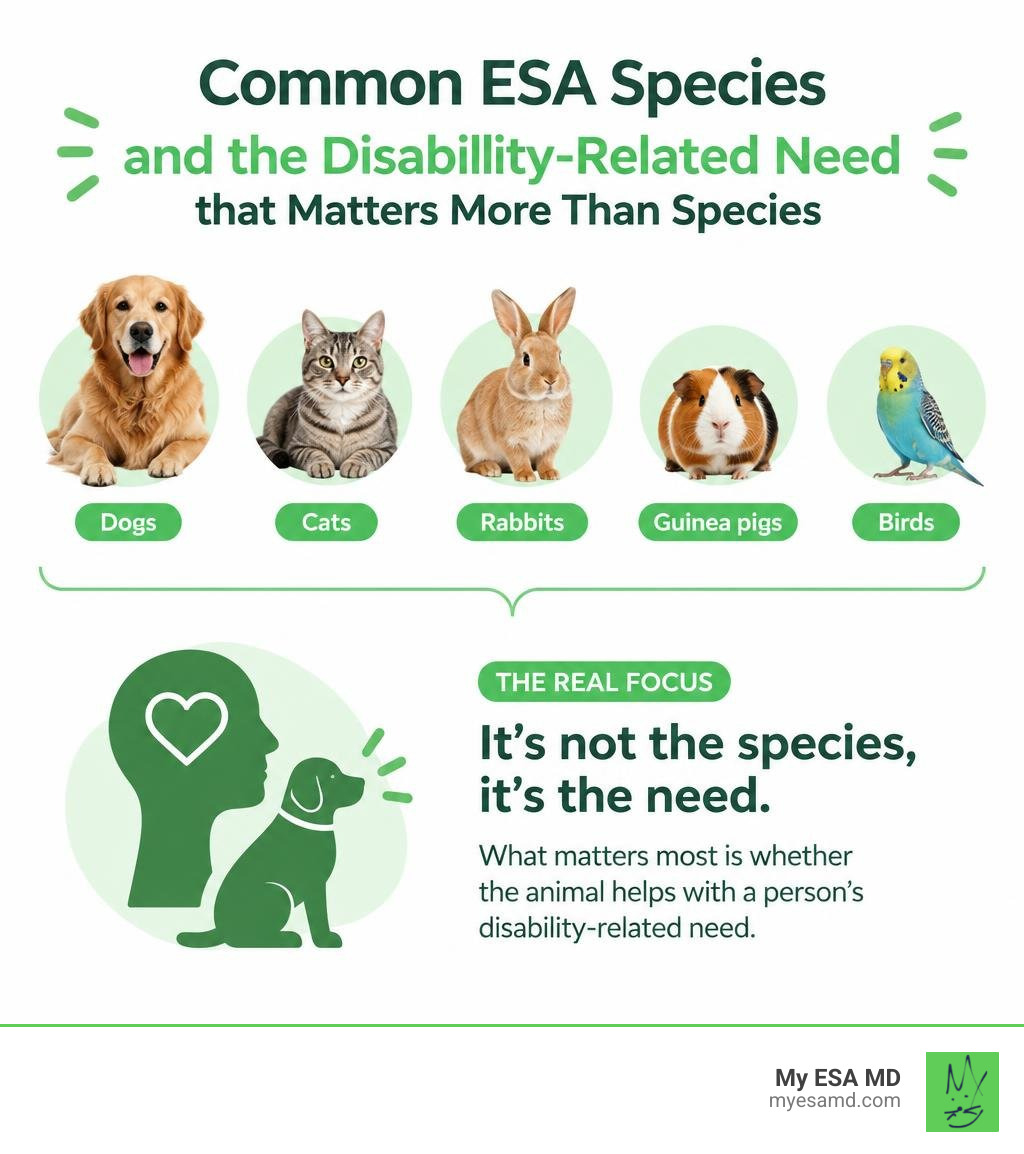
There is no official list of ESA-approved animals. Dogs, cats, rabbits, guinea pigs, and birds are common choices. Other legally kept animals may also qualify. What matters is whether the animal helps with a person's disability-related need, not its species alone.
If you live in no-pet housing, choosing an animal is only the first step. You may also need documentation from a licensed healthcare professional to request a housing accommodation. The animal must be safe, well cared for, and manageable in your home.
I'm Joscelyn Rieser, director at My ESA MD, where I help make information about esa approved animals and housing letters easier to understand. My work in doctor-led telehealth operations and web development shapes this practical guide to the animals people most often consider.
What Are ESA Approved Animals and How Do They Differ from Service Animals?
When discussing assistance animals, people often mix up emotional support animals, service animals, therapy animals, and standard family pets. Each category serves a unique purpose, operates under distinct legal definitions, and carries different rights under federal and state law.
An Emotional Support Animal (ESA) provides essential companionship, comfort, and therapeutic support to an individual managing a diagnosed mental or psychiatric condition. Unlike service animals, an ESA does not require specialized task training. Their comforting presence alone provides relief from debilitating symptoms such as chronic anxiety, major depressive episodes, or panic attacks.
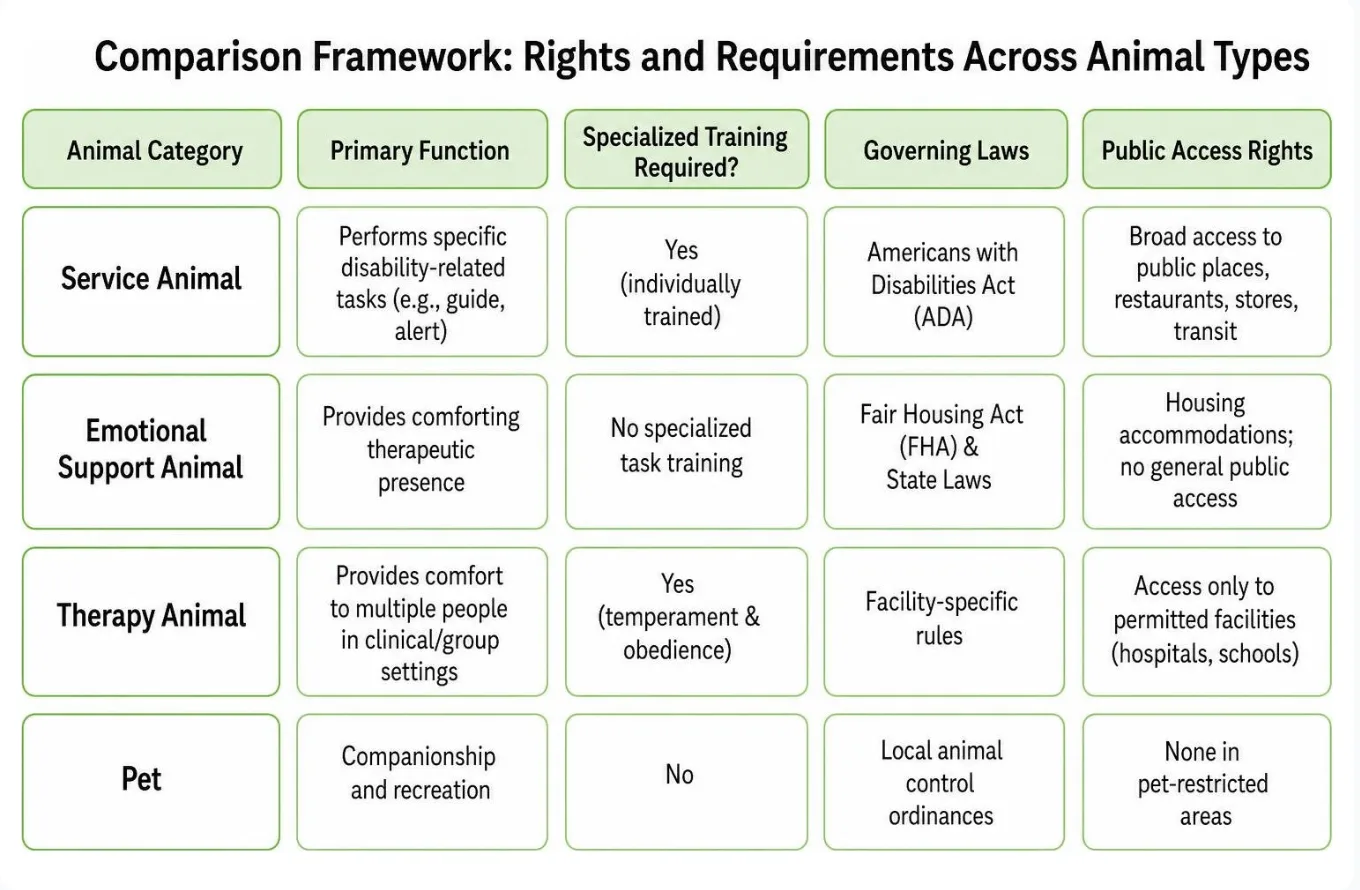
Here is how these categories compare:
| Animal Category | Primary Function | Specialized Training Required? | Governing Laws | Public Access Rights |
|---|---|---|---|---|
| Service Animal | Performs specific disability-related tasks (e.g., guide, alert) | Yes (individually trained) | Americans with Disabilities Act (ADA) | Broad access to public places, restaurants, stores, transit |
| Emotional Support Animal | Provides comforting therapeutic presence | No specialized task training | Fair Housing Act (FHA) & State Laws | Housing accommodations; no general public access |
| Therapy Animal | Provides comfort to multiple people in clinical/group settings | Yes (temperament & obedience) | Facility-specific rules | Access only to permitted facilities (hospitals, schools) |
| Pet | Companionship and recreation | No | Local animal control ordinances | None in pet-restricted areas |
Legal Distinctions Under Federal and State Regulations
Under Title II and Title III of the Americans with Disabilities Act, service animals are strictly defined as dogs—and in specific circumstances, miniature horses—individually trained to do work or perform tasks for a person with a disability. Detailed guidance is available via the Frequently Asked Questions about Service Animals and the ADA.
Because emotional support animals do not have task-specific training, they do not qualify as service animals under the ADA. This means they are not automatically permitted in grocery stores, restaurants, or hotels. In addition, under the revised Air Carrier Access Act rules established by the Department of Transportation, commercial airlines are only required to transport trained service dogs free of charge. Airlines treat emotional support animals as standard pets, which means travel is subject to individual airline pet policies, fees, and carrier size limits.
When it comes to housing, however, the Fair Housing Act recognizes assistance animals as reasonable accommodations. Understanding the core definition is the first step; you can explore the basics by understanding what is an emotional support animal.
No Official Government Species List
A common misconception is that a federal registry or pre-approved species roster exists. In reality, there is no government agency that issues ESA registration tags, certificates, or universal species lists. Commercial websites that sell "instant registration badges" or promise that an animal is officially entered into a federal database are selling unnecessary products that carry no legal weight in fair housing determinations.
Instead, whether an animal qualifies depends on an individualized assessment. A licensed healthcare provider evaluates your mental health needs and determines whether an animal provides documented therapeutic relief that alleviates your symptoms.
Top Species That Qualify for Emotional Support

Any domesticated animal that is traditionally kept in the home and legal to own in your jurisdiction can serve as an emotional support animal. The primary requirements are that the animal possesses a manageable temperament, does not create an unsanitary environment, and establishes a genuine emotional bond with its handler.
Most Popular ESA Approved Animals: Dogs, Cats, and Small Mammals
The vast majority of emotional support animals belong to classic domestic companion species. These animals naturally integrate into domestic living spaces and provide reliable daily routines.
- Emotional Support Dogs: Dogs of any breed or size can serve as emotional support animals. Their loyalty, intuitive responsiveness, and need for outdoor exercise help handlers maintain structure, combat isolation, and regulate panic symptoms.
- Domestic Cats: Cats are quiet, independent, and affectionate, making them ideal for individuals living in compact apartments or those who experience sensory overload. Their rhythmic purring and calm presence offer grounded comfort.
- Rabbits and Guinea Pigs: These gentle small mammals are quiet, clean, and interactive. They are particularly well-suited for individuals managing stress who thrive on tactile grounding through soft textures and calm handling.
- Hamsters, Gerbils, and Ferrets: Pocket pets require limited square footage while still offering routine, sensory connection, and companionship for people navigating depressive states. (Ferrets are illegal to keep as pets in California, Hawaii, and New York City.)
These smaller species are frequently chosen when arranging support animals for children who need a calming household presence, as well as providing quiet companionship and significant benefits for senior citizens.
Unique and Less Common ESA-Approved Animals That Qualify
While dogs and cats represent the majority of assistance companions, non-traditional animals can also serve as emotional support animals if they are legal to keep as household pets:
- Birds: Parakeets, cockatiels, and parrots offer social engagement and cognitive stimulation. Their vocalizations and long lifespans foster strong, lasting emotional bonds.
- Miniature Pigs: Highly intelligent and hypoallergenic, miniature pigs can provide grounded emotional companionship, provided local municipal zoning codes permit them in residential properties.
- Reptiles: Bearded dragons, geckos, and select non-venomous snakes are quiet, hypoallergenic, and possess rhythmic, calming movements that help many individuals de-escalate anxiety.
- Hedgehogs: These quiet, nocturnal animals fit handlers with unique work schedules who benefit from evening companionship without the noise of a barking dog.
Housing Rights, College Dorms, and Reasonable Accommodations
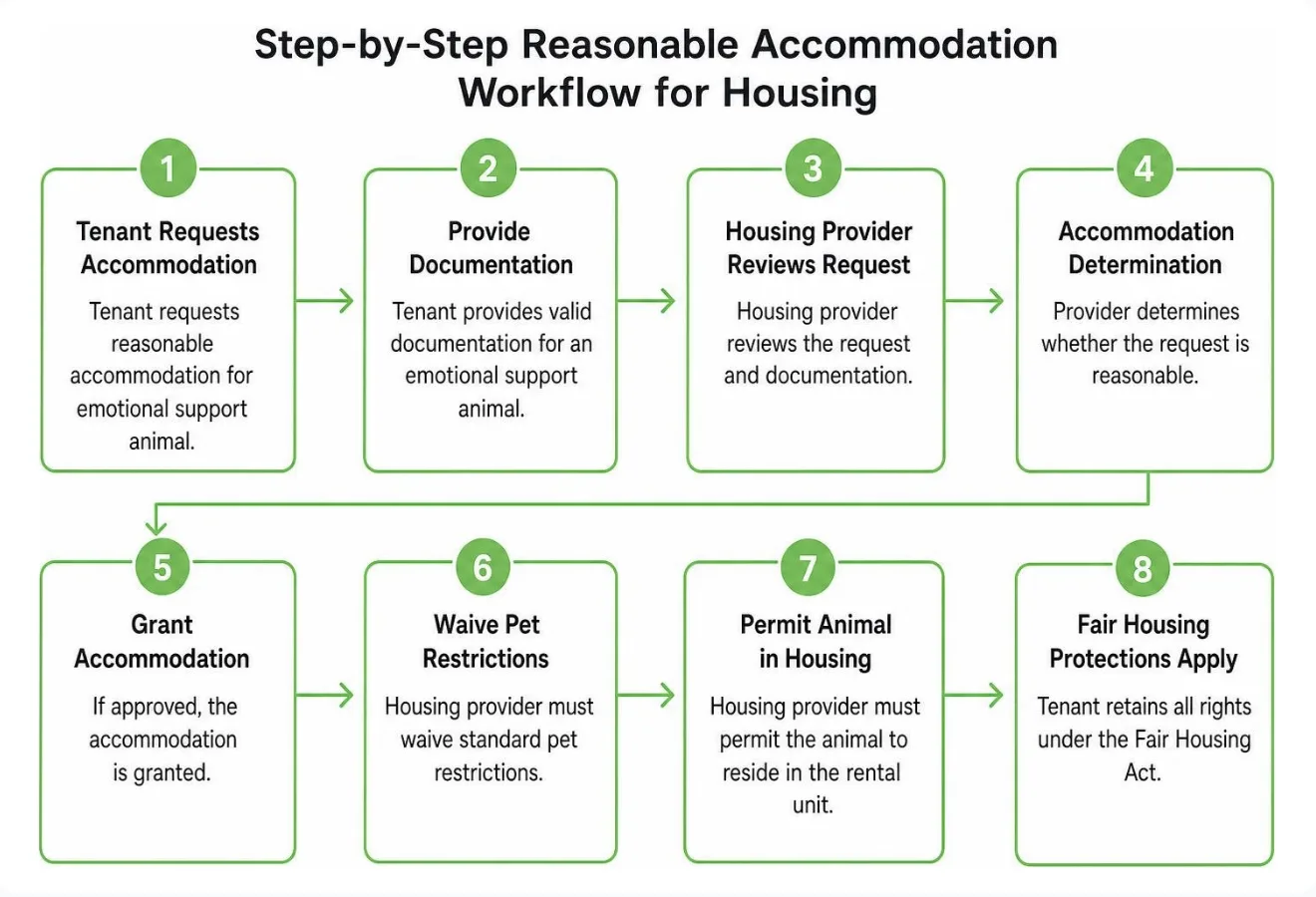
Under the Fair Housing Act, tenants with documented disabilities have the legal right to request reasonable accommodations for their assistance animals. When an accommodation is granted, housing providers must waive standard pet restrictions.
Exercising Tenant Rights in Rental Properties
Depending on your state's law, when you hold valid documentation for an emotional support animal, your housing provider may be required to grant reasonable modifications to standard property rules:
- No-Pet Policy Waivers: Landlords must permit the animal to reside in your rental unit, even in buildings with strict "no pets" policies.
- Pet Deposit and Monthly Fee Exemptions: Housing providers cannot charge pet deposits, application fees, or ongoing monthly pet rent for an ESA, because the animal is legally categorized as an assistance animal rather than a pet.
- Breed and Weight Limit Exceptions: Blanket restrictions targeting specific dog breeds (such as Pit Bulls, Rottweilers, or German Shepherds) or weight caps cannot be automatically applied to an ESA.
For state-specific nuances, consult official resources like the Emotional Support Animals and Fair Housing Law FAQ. You can also learn more about protecting your rental status through emotional support animal housing rights and how to properly present an emotional support animal apartment letter.
Bringing Assistance Animals to College Dormitories

University residential halls fall under the jurisdiction of fair housing rules. College students experiencing diagnosed mental health conditions, such as adjustment disorders, chronic depression, or severe anxiety, can request permission to keep an ESA in their dorm room.
To bring an ESA to campus:
- Contact the university's Disability & Access Services office well before move-in day (many universities request 30 to 60 days advance notice).
- Submit an accommodation request accompanied by a medical letter from a licensed healthcare provider.
- Provide up-to-date veterinary records, proof of mandatory local vaccinations (such as rabies), and applicable municipal animal licenses.
University policies generally permit the ESA inside the student's assigned private residential room or apartment. The animal is typically not permitted in academic classrooms, dining halls, or communal campus spaces. For campus-specific preparation, read our guide on emotional support animals in college dorms.
Owner Responsibilities and Documentation Requirements
Securing legal accommodation for an ESA comes with practical responsibilities. Handlers must ensure their animals remain safe, hygienic, and non-disruptive within shared living environments.
- Behavioral Control: The animal must remain under the handler's direct control at all times, using a leash, carrier, or crate when passing through common hallways and courtyards.
- Sanitation and Waste Management: Handlers must clean up after their animal promptly and dispose of waste in designated outdoor areas.
- Property Care: While landlords cannot charge upfront pet deposits, handlers remain financially liable for any actual property damage caused by their animal.
- Health and Safety: Animals must maintain current vaccinations and meet local licensing ordinances.
Obtaining Legitimate Medical Documentation
A valid ESA letter must come from a licensed mental health professional or medical doctor who has evaluated your condition. Real documentation is rooted in clinical care.
A legitimate ESA letter must include:
- The clinician's full name, professional title, and medical license number.
- The state where the clinician is licensed and the date the license was issued.
- The provider's official business letterhead, contact details, and signature.
- A clinical statement confirming that you have a diagnosed mental or psychiatric impairment and that the animal provides therapeutic support that mitigates your symptoms.
If you are wondering about the steps involved, review how to get an ESA letter for housing. At My ESA MD, we connect patients with licensed medical doctors who can issue emotional support animal housing letters through telehealth, usually the same day, except in states that require a waiting period. California patients seeking letters for dogs follow a 30-day process required by state law. We operate on transparent flat fees with no ongoing subscription costs, ensuring your documentation is legally sound and backed by real clinical professionals. Discover why genuine care represents more than just an ESA letter.
Multiple Animals and Letter Validity
Some individuals require more than one emotional support animal to manage different aspects of their disability (for example, a dog that provides routine and grounding during the day, and a cat that eases nighttime panic).
To keep multiple ESAs in no-pet housing:
- The medical documentation should list each animal the patient needs.
- The provider should explain the disability-related need for each animal.
- The total presence of multiple animals must not create an undue structural burden or unsanitary condition in the housing unit.
Housing providers often check the date on your documentation, making it helpful to verify if an ESA letter is valid for 1 year and ensure your paperwork remains current.
Frequently Asked Questions About ESA Approved Animals
Depending on the state you live in, a landlord or housing provider may be able to deny an ESA request only under specific exceptions. In states without their own ESA protections, the resident often has to do much more to show why the animal is needed. Common exceptions include:
- Direct Threat: The specific animal poses a documented direct threat to the health and safety of others that cannot be mitigated by reasonable measures (e.g., a history of aggressive biting).
- Substantial Property Damage: The animal has caused severe, unmitigated damage to the premises.
- Undue Financial or Administrative Burden: Accommodating the animal would impose an unreasonable financial strain on the property owner.
- Exempt Properties: Certain small properties are exempt from the Fair Housing Act, such as owner-occupied buildings with four or fewer units, and single-family homes rented directly by the owner without a broker (provided the owner owns no more than three such homes). Some state laws, such as California's Fair Employment and Housing Act (FEHA), still cover many of these properties.
If a landlord denies your legitimate ESA accommodation:
- Request a written explanation detailing the specific reasons for the denial.
- Engage in an interactive dialogue to address any practical concerns regarding noise, waste, or liability.
- Ensure your medical documentation clearly establishes the link between your disability and the assistance the animal provides.
- If the denial constitutes unlawful discrimination, you can file an administrative complaint with your state civil rights division or fair housing agency, or seek private legal advice.
Conclusion
Choosing an emotional support companion is an important step toward managing daily mental wellness. Because federal and state regulations focus on your individual therapeutic need rather than a rigid list of approved species, you have the flexibility to choose a companion—whether a dog, cat, rabbit, bird, or other domesticated pet—that genuinely supports your health.
Responsible ESA ownership pairs everyday behavioral training and hygiene with legitimate medical documentation. If you are ready to secure valid housing documentation through a doctor-led telehealth evaluation, begin by finding out who is eligible for an emotional support animal today.
Ready to Talk to a Doctor?
Book a telehealth evaluation with a licensed MD. One flat fee, no memberships, and real people who answer the phone.
Approved by: Dr. Rick Rieser, MD — Medical Director, My ESA MD. Stanford-trained physician, 30+ years of clinical experience.