
An emotional support animal may provide comfort and companionship as part of an individualized approach to mental health or disability-related needs. Whether an animal is appropriate depends on a person's circumstances and should be considered with a qualified clinician.
- An ESA is not a service animal under the Americans with Disabilities Act unless it is a dog individually trained to perform disability-related tasks.
- Housing accommodation requests are evaluated individually under applicable rules.
- An ESA letter may support a housing request when clinically appropriate, but it does not guarantee approval.
Through a telehealth appointment, a licensed MD can assess whether ESA documentation is appropriate for a patient's situation. Housing providers make their own accommodation decisions under federal reasonable-accommodation regulations, so documentation supports a request rather than determining the outcome.
My ESA MD is a doctor-led telehealth practice that helps patients explore ESA housing documentation when a licensed clinician determines it is clinically appropriate. The guidance below explains the role of an ESA, the evaluation process, and important housing considerations.
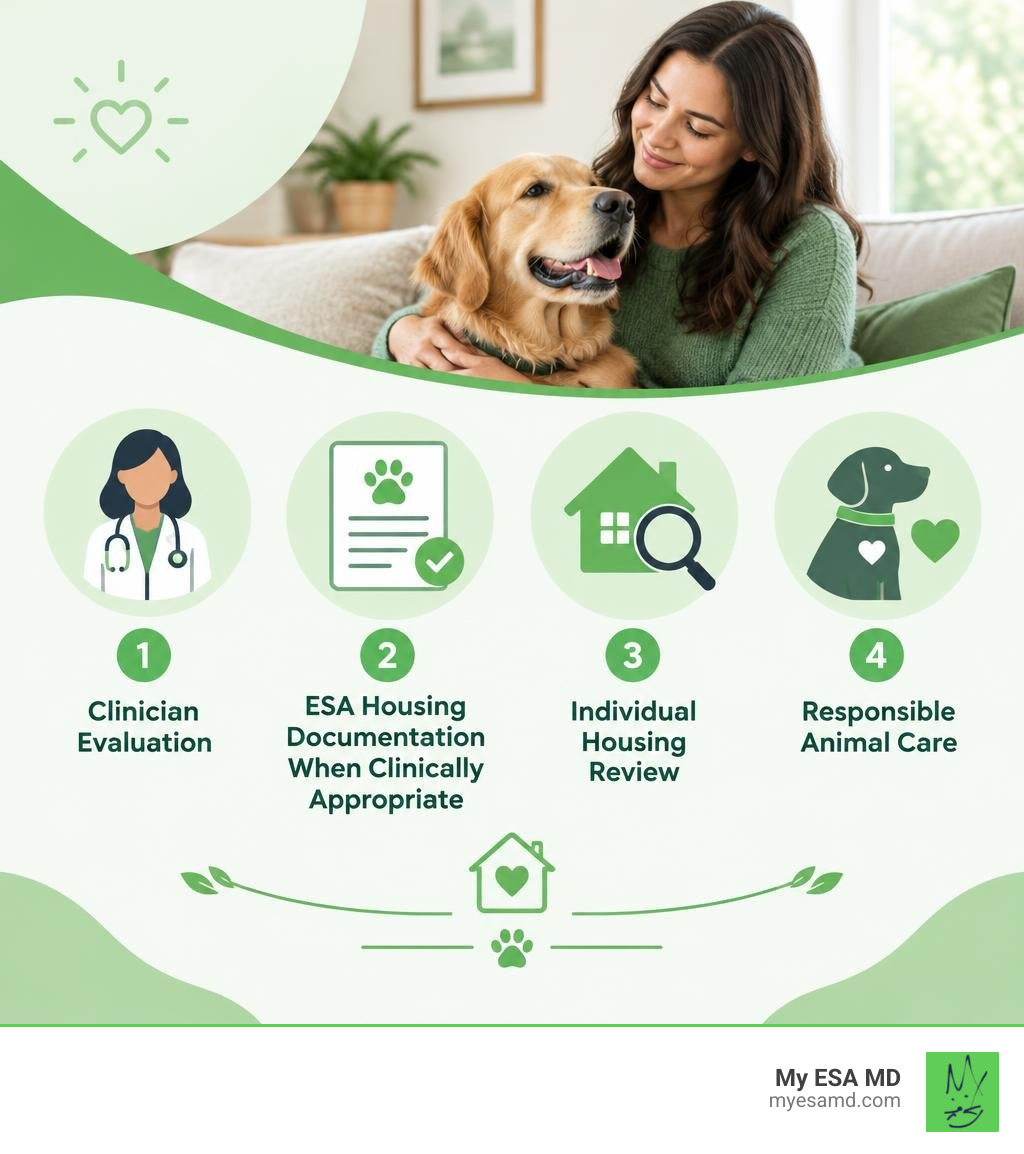
What an Emotional Support Animal Is—and Is Not
An emotional support animal (ESA) is a companion animal that may provide comfort or other emotional support related to a person’s mental health or disability-related needs. An ESA is not defined by a particular breed, special vest, or certification. Whether an animal may be helpful is an individual question that should be considered with a qualified clinician.
An ESA is also not the same as a service animal under the Americans with Disabilities Act (ADA). The ADA defines service animals as dogs individually trained to do work or perform tasks for a person with a disability. Emotional support, companionship, or comfort alone does not qualify a dog as a service animal under that definition.
Housing is a separate context. Depending on the circumstances and applicable law, a person may request a reasonable accommodation to keep an assistance animal in housing where pets are restricted. That request is considered individually; an ESA letter does not give an animal unrestricted access to public places.

How an Emotional Support Animal May Support Well-Being
People may value an animal’s companionship, routine, or calming presence. For some, caring for an animal can encourage structure in the day or make time at home feel less isolating. These experiences vary from person to person, and no particular outcome is guaranteed.
A clinician can discuss whether an animal might have a supportive role in light of someone’s needs and circumstances. An ESA should not be treated as a replacement for mental health care, medication, or other treatment a clinician recommends. It may be one part of a broader, individualized approach.
How Emotional Support Animals Differ from Service Animals
The main distinction is the role the animal plays and the laws that may apply. A service dog is trained to perform specific tasks related to a person’s disability, such as guiding someone who is blind or alerting someone to a medical event. An ESA provides emotional support through its presence; it does not need task training to serve that role.
That difference affects public access. The ADA’s public-access protections apply to qualifying service animals, not ESAs solely because they provide comfort. Housing accommodation requests are evaluated under different rules, and other laws or policies may apply in settings such as air travel or workplaces. Check the rules that apply to the specific setting rather than assuming an ESA can go everywhere.
How to Explore an Emotional Support Animal with a Clinician
A conversation with a licensed clinician can help you consider whether an animal may be relevant to your mental health or disability-related needs. An evaluation should focus on your circumstances and clinical needs, not on a guaranteed letter.
My ESA MD connects patients with licensed MDs for telehealth evaluations. If the physician determines that an ESA housing letter is appropriate, the provider issues it the same day, except in states like California where a waiting period is required. We use transparent flat-fee pricing, do not require memberships, and offer a money-back guarantee if you do not qualify. An evaluation does not guarantee that you will qualify or that a housing provider will approve a request.

What to Expect During an Evaluation
An evaluation may cover your mental health history, symptoms, and how they affect day-to-day life. The clinician may also ask about treatment you have tried and how you think an animal could support you. Be prepared to discuss your situation honestly and ask questions about the evaluation or the clinician’s conclusions.
You might ask:
- What information will the evaluation consider?
- How could an animal fit into my overall support or treatment plan?
- If a housing letter is clinically appropriate, what information will it provide?
- What should I expect after the evaluation?
The clinician makes an independent assessment. If an ESA is not considered appropriate based on the evaluation, a letter may not be issued.
Housing Documentation and Service Details
A housing letter may provide information relevant to a request for an accommodation. It is not a permit, a guarantee of housing approval, or a substitute for the housing provider’s review. The provider may consider the request and supporting information under applicable law and its processes.
Our service is delivered by telehealth, and evaluations are conducted by licensed MDs. When clinically appropriate, the provider will issue a housing letter the same day, except in states like California where a waiting period is required. We explain our flat fee before you proceed, do not charge a membership fee, and provide a money-back guarantee if you do not qualify.
Housing Requests, Responsibilities, and Legal Limits
Housing accommodation requests are assessed under applicable federal, state, and local requirements. The federal Fair Housing Act addresses reasonable accommodations in housing, but coverage and outcomes depend on the circumstances. Some housing situations may be exempt from parts of the law, and other rules may apply.
A housing provider may review a request and relevant documentation. A letter does not automatically establish eligibility or compel approval in every situation. You can review the federal reasonable-accommodation regulation, but for questions about a particular dispute or housing situation, consider seeking advice from a qualified legal professional.
Preparing a Housing Accommodation Request
A clear, organized request can make it easier to communicate with a housing provider. Consider these steps:
- Review your lease and the housing provider’s process for accommodation requests.
- Make the request in writing and explain that you are seeking an accommodation related to a disability.
- Provide relevant documentation if requested and appropriate. Share only information needed for the request.
- Keep copies of your request, supporting documents, and any responses.
- Ask the provider about its process and expected response time. If there is a delay or disagreement, keep communications factual and consider getting qualified advice.
A housing provider may have questions or request additional information, depending on the circumstances and applicable requirements. Respond clearly, keep a record of what you send, and avoid assuming that a specific timeline or outcome applies to every request.
Caring for an Emotional Support Animal
An accommodation request does not remove your responsibility to care for the animal and follow applicable housing rules. Before bringing an animal home, think through its needs and your ability to meet them.
Plan for food, exercise, grooming, routine veterinary care, and any training or behavior support the animal may need. Consider how the animal will respond to neighbors, shared spaces, and time alone. You are generally responsible for preventing damage and addressing behavior that creates a safety concern or significant disruption.
It is also wise to plan for expenses and backup care if you become ill, travel, or cannot temporarily look after the animal. A good match should consider both your needs and the animal’s welfare.
Frequently Asked Questions About Emotional Support Animals
Conclusion
Considering an emotional support animal involves more than obtaining a letter. A clinician can help you explore whether an animal may be appropriate for your individual needs, while responsible care means considering the animal’s well-being and your housing responsibilities. Accommodation requests are reviewed under applicable rules, and approval is not guaranteed.
My ESA MD connects patients with licensed medical doctors for telehealth evaluations to help people explore whether an ESA may meet a disability-related need in housing. For information about who may be eligible for an emotional support animal, see our eligibility guidance.
Thinking About an Emotional Support Animal?
Talk with a licensed MD about whether an emotional support animal is right for you. One flat fee, no memberships, and real people who answer the phone.
Approved by: Dr. Rick Rieser, MD — Medical Director, My ESA MD. Stanford-trained physician, 30+ years of clinical experience.